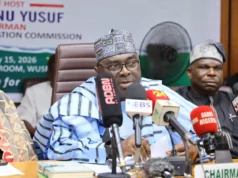
Uyo, Feb. 11, 2026 (NAN) An NGO, called the Rule of Law and Empowerment Initiative, also known as Partners West Africa Nigeria, on Wednesday, organised a one-day enlightenment workshop for Akwa Ibom residents on ways to curb human rights violations in the state.
Speaking at the event in Uyo, the organisation’s Programme Manager, Mrs Aisha Abubakar, said the initiative was designed to educate the citizens on their basic human rights.
Abubakar also said that the essence of the workshop was to increase people’s awareness about their protection as guaranteed under the Police Act 2020.
She also said that the objective of the event was to strengthen public trust in the Nigeria Police Force by promoting effective accountability and also ensure the implementation of the provision of the Act on gender.
According to her, the event was expected to majorly bridge the gap with respect to knowledge, trust and engagement that has to do with the police and the public.
Abubakar expressed the optimism that improved legal awareness would help curb human rights violations, promote justice and strengthen trust between citizens and the police.
In a paper, entitled “Know your Rights”, Dr Glory Udonnah, said she would sensitise the public to their fundamental human rights and the provision of the Police Act 2020 in the state.
Udonnah said the Police Act prohibits arrest over civil debts, by proxy, the use of excessive force, arrest by torture and unlawful detention without charge.
“Let me tell you what police can’t do: the police cannot arrest you for owing debt.
“They should treat you in a very humanly form and no torture.
“It is a violation of your rights as provided for under the Constitution,” she said.
Udonnah also said that every arrested person has an unhindered right to a legal representative as provided for under the Constitution (Section 37).
“They should not handcuff you unnecessarily, except resistance from you or when you want to run,” she said.
Udonnah expressed the need for effective community policing, saying that the Act was to bridge the gap between police and the public through clearly defined rights and responsibilities.
“If arrested, you have the right to say I want to speak to my lawyer because the lawyer will help you to know how to do things right.
“There will be respect for the fundamental rights as provided for in the constitution.
“The police are also afraid of the lawyer because they know that petition will follow,” Udonnah said. (NAN)