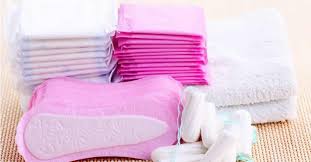
Girls in some underserved communities across the FCT have decried barriers to accessing menstrual hygiene products, forcing many to resort to unsafe alternatives during menstruation.
The girls said the situation also caused many of them to miss school during their menstrual periods.
A News Agency of Nigeria (NAN) correspondent visited communities including Pigba-Kasa, Waru, Tasha in Apo and the Mechanic Village area.
Findings showed that rising poverty, lack of parental support and increasing sanitary pad costs were worsening menstrual hygiene challenges among vulnerable girls.
One of the girls interviewed, 17-year-old Favor Hosea, said she had struggled to access sanitary pads since she started menstruating at age 13.
According to her, the death of her father and the absence of her mother left her dependent on her grandmother, who could barely cater for her needs.
“When I ask for money for pads, nobody cares about it. One of my friends usually gives me pads for the four days my period lasts.
“But when she cannot help me, I stay at home and wear only my underwear, washing often because I have nothing to use,” she said.
Similarly, Patience Kingsley, from Pigba-Kasa community, appealed to government and well-meaning individuals to support girls with menstrual hygiene necessities.
Another resident of the community, Ojimadu Victoria, said she did not have access to sanitary pads every month.
“When my aunt has money, she buys pads for me, but not always. I learnt from my elder sister how to use cloth as an alternative when pads are unavailable,” she said.
In Waru community, an emotional Waliyat Muftau said she had never used sanitary pads since she began menstruating four years ago because her family could barely afford food.
“My family cannot afford food all the time, so I cannot ask for money to buy pads. Some days I miss school because I have nothing to use.
“I use cloth, but I want government and other stakeholders to help girls like me with pads and detergents during menstruation,” she pleaded.
Also speaking, Favor Udoji from Tasha community in Apo said she alternated between sanitary pads and rags due to financial constraints.
“Sometimes there is no soap to wash the rags, so I wash them with only water,” she said.
Chinemerem Joseph, a resident of the Mechanic Village community, said she relied on her aunt for sanitary pads.
“My aunt buys pads for me whenever she visits. The pack usually lasts about two months, but if it finishes before she comes again, I use rags,” she said.
Some other girls interviewed disclosed that they sometimes used tissue paper or nothing at all during menstruation due to lack of access to sanitary products.
They appealed to government, non-governmental organizations and other stakeholders to support vulnerable girls with menstrual hygiene materials.
Speaking on the development, Jacinta Auta, a Community Health Practitioner and founder of SheHealed Health and Advocacy Initiative, identified affordability as one of the major barriers to menstrual hygiene management among girls in low-income communities.
According to her, many families struggling to meet basic needs often consider sanitary pads a luxury rather than a necessity.
“Another challenge is lack of awareness and menstrual education, especially in communities where menstruation is still treated as a taboo subject.
“We also see poor access to menstrual-friendly sanitation facilities in some schools and rural communities,” she said.
Auta, who is also the convener of the Pad a Girl outreach initiative in Kwali Area Council, noted that the rising cost of sanitary products had further worsened the situation for girls from poor homes.
“Some girls are forced to use unsafe alternatives such as old cloths, tissue paper or other unhygienic materials, exposing them to infections and discomfort.
“For families with multiple female children, providing pads every month has become increasingly difficult,” she added.
She further said many girls still missed school during their menstrual cycle due to lack of sanitary pads and inadequate sanitation facilities.
“Some schools lack clean toilets, water supply, privacy and proper disposal systems. This affects not only girls’ education, but also their confidence and emotional wellbeing,” she said.
The advocate, therefore, called on government and stakeholders to prioritize subsidizing menstrual products and improving menstrual health education in schools and communities.
According to her, there is also a need for clean and girl-friendly sanitation facilities, as well as stronger partnerships with NGOs, private organizations and community advocates to expand pad distribution and awareness campaigns.
She stressed that addressing menstrual hygiene challenges was essential to promoting the health, dignity and education of girls across the FCT. (NAN)