The United Nations Children’s Fund (UNICEF) has expressed concern over the growing number of Nigerian children lacking the skills required to secure employment and participate in the rapidly evolving economy.
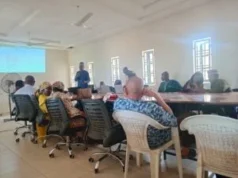
UNICEF’s Chief of Lagos Field Office, Celine Lafoucriere, raised the concern on Wednesday in Ede, Osun , during a two-day media dialogue on digital learning, artificial intelligence (AI), and skills development for out-of-school children.
The News Agency of Nigeria (NAN) reports that the workshop was organized by UNICEF in partnership with the Osun Ministry of Education, the Federal Ministry of Education, the Universal Basic Education Commission (UBEC), the Global Partnership for Education (GPE), among others.
The workshop attracted journalists from Lagos, Ogun, Oyo, Osun, Ekiti, Ondo and Edo states.
Lafoucriere noted that among children who attend school in Nigeria, only one in four can read proficiently and perform basic mathematics by the age of 14.
“Just one in four—and we are only talking about the children who make it to school.
“There are 10 million more who never get to school at all.
“That is the reality that brings us here today—not numbers in a spreadsheet or reports sitting on someone’s desk, but real children growing up without the skills they need to secure jobs, care for themselves and their families, and contribute meaningfully to the economy,” she said.
She warned that the rapid advancement of artificial intelligence is reshaping the global economy, stressing that children without digital skills risk being left behind.
“The children who know how to use these technologies will have opportunities. Those who do not will be excluded. Right now, out-of-school children in Nigeria are the ones being left out—and, unfortunately, girls are the most affected,” Lafoucriere added.
She urged the media to play a more active role in reshaping public narratives around education, noting that sustained reporting can drive policy action.
“Policymakers listen when issues remain in the public space. A story that does not go away is a story that gets acted upon,” she said.
Speaking on the objectives of the dialogue, UNICEF Communication Officer at the Lagos Field Office, Blessing Ejiofor, said participants were expected to gain a clear, data-driven understanding of out-of-school children—who they are, why they dropped out, and the broader implications for Nigeria.
Ejiofor added that participants would also develop story angles, select formats, and produce publishable content at the end of the session.
In his remarks, Osun Commissioner for Education, Sunday Eluwole, reaffirmed the state government’s commitment to leveraging digital learning, artificial intelligence, and skills development programmes to address the challenge of out-of-school children.
Represented by the Permanent Secretary in the ministry, Mr Murtala Jimoh, Eluwole said technological innovation presents new opportunities to bridge educational gaps and expand access to quality education.
He described the dialogue as a strategic platform for exploring innovative solutions to educational exclusion and improving learning outcomes for vulnerable children.
“Digital technology and artificial intelligence offer unprecedented opportunities to bridge educational gaps, expand access to learning, and equip vulnerable children with the knowledge and skills needed for success,” he said.
The commissioner commended UNICEF for its sustained partnership, noting that the collaboration reflects a shared commitment to addressing the growing challenge of out-of-school children.
According to him, millions of children globally, including many in Nigeria, remain excluded from formal education due to socio-economic, cultural, geographical, and security challenges.
“Our partnership with UNICEF demonstrates a shared commitment to improving access to education, empowering vulnerable children, and advancing equitable, quality learning across communities in Osun State,” he said.
Eluwole further noted that digital learning platforms support teachers and enhance education delivery by making learning more accessible, flexible, inclusive, and engaging regardless of location.
He emphasized the need to ensure no child is left behind in the ongoing digital revolution and called on stakeholders to embrace technology-driven interventions and relevant skills acquisition programmes.
The commissioner also highlighted the critical role of the media in shaping public perception, influencing policy discussions, and mobilizing support for education through accurate reporting and sustained advocacy.
“The media remains a key partner in promoting awareness, influencing educational policies, and highlighting innovative solutions that support out-of-school children and community development,” he added. (NAN)