The Federal Government and Development partners have called for stronger collaboration and increased investment to address persistent challenges in Nigeria’s urban water supply sector and expand access to safe and reliable services.
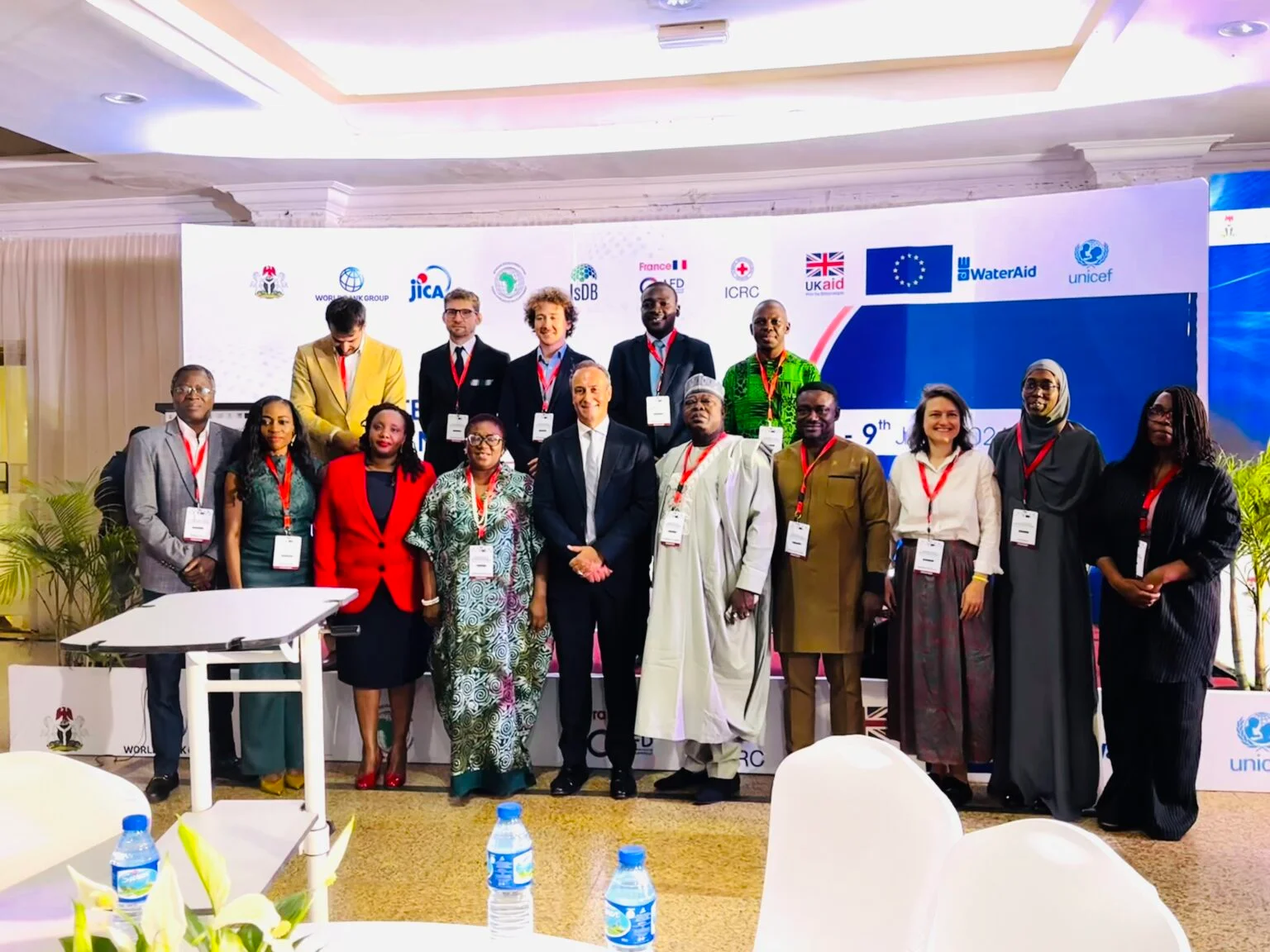
The call was made on Monday in Abuja at a workshop on Urban Water Supply Sector Report in Nigeria: Progress, Challenges and the Way Forward, organized by the Federal Ministry of Water Resources and Sanitation with development partners.
The News Agency of Nigeria (NAN) reports that the workshop seeks to clarify challenges in implementing urban water reforms, identify replicable success factors, and draw lessons from local and international experiences.
Speaking on behalf of the Development Partners Group for the Water and Sanitation Sector, the Ambassador of France to Nigeria and ECOWAS, Marc Fonbaustier, commended Nigeria’s reform efforts, infrastructure investments and strengthened cooperation among stakeholders.
He said representatives from 25 states attended the workshop, describing it as evidence of strong national commitment to improving water services.
Fonbaustier said Nigeria had recorded progress through governance reforms, institutional strengthening and infrastructure investments, but noted that major gaps remained.
He said many urban households still depended on boreholes, water vendors and tanker services, which were often costly, unreliable and unsafe.
“Accelerating access to sustainable, affordable and reliable water services remains a top priority,” he said.
He added that the workshop, supported by the French Development Agency, was designed to share experiences, identify practical solutions and strengthen sector collaboration.
Fonbaustier disclosed that the agency had committed over 300 million euros to water investments across seven Nigerian states in the past decade.
He said water investments go beyond infrastructure, improving health outcomes, reducing burdens on women and children, and supporting economic activity.
He also noted that water security challenges were now global, driven by climate change and rising demand.
“In some ways, Nigerians are ahead of us because you understand the realities of water security and the widening demand gap,” he said.
Representing the Minister of Water Resources and Sanitation, Director of Water Supply and Support Services, Dr Mukaila Babarinde, said access to safe water remained critical to public health and socio-economic development.
He said Nigeria continued to face pressures from population growth, climate variability, water scarcity and financing gaps, which threatened Sustainable Development Goal targets on water and sanitation.
Babarinde said addressing the challenges required major investments, policy reforms, integrated water resources management and stronger partnerships.
He commended development partners including the World Bank, African Development Bank, Japan International Cooperation Agency, Foreign, Commonwealth and Development Office, WaterAid and Islamic Development Bank for supporting sector programmes.
He said these included the National Urban Water Sector Reform Projects, the Sustainable Urban and Rural Water Supply, Sanitation and Hygiene Programme, and projects in Oyo, Taraba, Kaduna, Yobe and Osun states.
He said about 30 per cent of Nigerians still lacked access to basic water services, while 56 per cent lacked basic sanitation.
He added that the workshop aimed to identify challenges, highlight success factors and guide future investments in the sector.
A Consultant, Paul Maycher, said his 25 years of experience showed that infrastructure alone could not ensure sustainable water services.
He stressed the need for institutional reforms, operational efficiency and improved utility management.
He said his work on a revenue cycle management project for the former National Electric Power Authority highlighted shared challenges across utilities, including weak systems, low cost recovery and illegal connections.
He said the experience reinforced the importance of strong institutions and effective revenue systems for sustainability.
NAN reports that the Development Partners Group are the Agence Française de Développement, World Bank, African Development Bank, UNICEF, Foreign, Commonwealth and Development Office, WaterAid, Japan International Cooperation Agency, and others.
The group supports Nigeria’s water and sanitation sector through financing, technical assistance and policy collaboration aimed at improving service delivery and expanding access to safe water and sanitation services. (NAN)