By Ugochi Eze
LAGOS, Nigeria – Heavy flooding triggered by hours of persistent rainfall has disrupted commercial, educational, and transportation activities across several communities in Lagos State, leaving residents stranded, damaging property, and causing widespread traffic congestion.
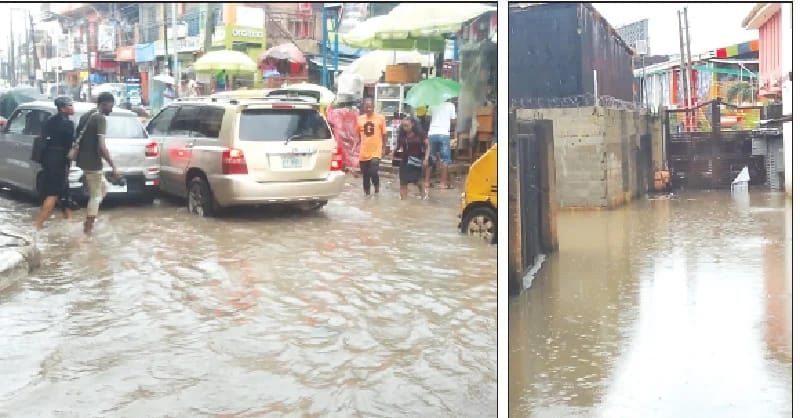
The heavy downpour, which began in the early hours of Tuesday and continued for several hours, submerged major roads and residential areas in communities such as Gbagada, Mushin, Ketu, Lekki, Ajegunle, Surulere, and parts of Lagos Island.
Floodwaters covered roads, making them impassable for both motorists and pedestrians, while many residents were forced to remain indoors as water entered homes and business premises.
Commercial activities were brought to a standstill in many affected areas as shop owners struggled to protect their goods from floodwaters.
Some businesses remained closed throughout the day, while traders whose shops were flooded counted significant losses.
Several motorists abandoned their vehicles after roads became impassable, forcing commuters to trek long distances or seek alternative routes to their destinations.
Traffic congestion worsened across major roads, including the Third Mainland Bridge access roads, Ikorodu Road, and the Lekki-Epe Expressway, as vehicles moved slowly through flooded sections.
Public transport operators also faced difficulties navigating the roads, leading to increased transport fares and long waiting hours for passengers.
Many schools and offices recorded low attendance as workers and students were unable to leave their homes due to flooded streets.
Parents expressed concerns over the safety of their children, with some schools advising students to remain at home until weather conditions improved.
Residents of the affected communities blamed the recurring flooding on blocked drainage channels, indiscriminate disposal of refuse, and inadequate drainage infrastructure.
They argued that despite repeated warnings during the rainy season, little had changed to prevent flooding in many parts of the state.
A resident of Gbagada, Mrs. Esther Adewale, said the flood entered her apartment, destroying furniture, food items, and electrical appliances.
“Whenever it rains heavily, we become anxious because we know our homes will be flooded. We have lost many valuable items over the years, and we hope the government will find a lasting solution,” she said.
Another resident, Mr. Chinedu Okafor, described the situation as frustrating, noting that many people spent hours in traffic because several roads were completely submerged.
“I left home very early for work, but I spent more than three hours on the road because vehicles could barely move. Some people had to abandon commercial buses and continue on foot,” he said.
Business owners also lamented the financial losses caused by the flooding.
A trader at Ketu Market, Mrs. Aisha Bello, explained that several cartons of food items were destroyed after floodwater entered her shop.
“We work hard to make a living, but each time heavy rain falls, we suffer huge losses.
It is becoming increasingly difficult for small business owners,” she said.
Environmental experts have consistently warned that rapid urbanization, poor drainage systems, and the blockage of waterways by waste contribute significantly to flooding in Lagos.
They have urged residents to avoid dumping refuse into drainage channels while calling on authorities to improve drainage infrastructure and enforce environmental sanitation laws.
Officials of the Lagos State Government have repeatedly advised residents living in flood-prone communities to remain vigilant during the rainy season and to cooperate with environmental agencies by keeping drainage channels free of waste.
Emergency response agencies also encouraged residents to avoid driving or walking through flooded roads due to the risk of accidents and hidden drainage channels.
Although no fatalities were immediately reported, many residents continued to assess the damage caused by the flood as the rain subsided.
Several homes remained waterlogged, while business owners began cleaning their shops and salvaging damaged goods.
The latest flooding has once again renewed concerns over the growing impact of climate change and inadequate urban drainage systems in Nigeria’s commercial capital.
Residents have called on the Lagos State Government to implement long-term flood control measures, improve drainage networks, and strengthen waste management practices to reduce the recurring destruction experienced during the rainy season.
As cleanup efforts continue across affected communities, many residents hope that sustainable solutions will be introduced to prevent future flooding and protect lives, property, and economic activities in Lagos State.