A veteran actor and the Oloja-Elect of Lagos, Jide Kosoko, has advocated deeper community participation in Nigeria’s malaria elimination efforts.
He also threw his weight behind Federal Government’s initiatives aimed at tackling the disease.
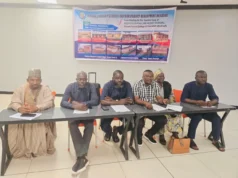
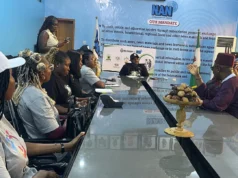
Kosoko said this on Friday in Abuja during a courtesy visit to the Minister of State for Health and Social Welfare, Adekunle Salako, ahead of the 2026 World Malaria Day.
The engagement, held under the IMPACT Project, focused on strengthening advocacy, awareness, and grassroots mobilization to complement government interventions against malaria.
Kosoko expressed concern over the continued prevalence of malaria in Nigeria and sought updates on strategies being deployed to achieve a malaria-free status.
He said that his ongoing sensitization tours across schools and health facilities in Lagos and Abuja were designed to educate young people and communities on preventive measures.
“I am here representing the community. While government has made notable efforts, there is a need to intensify grassroots involvement to achieve lasting results,” he said.
Kosoko commended the minister for accommodating the visit in spite of a demanding schedule and for encouraging broader stakeholder participation in malaria control programmes.
In his response, Salako described the visit as timely and lauded Kosoko’s commitment to public health advocacy.
He said the Federal Government had adopted a more proactive approach through the “Rethinking Malaria Strategy,” introduced at the onset of the of President Bola Tinubu’s administration.
According to the minister, the strategy prioritizes prevention, global best practices, and multi-sectoral collaboration to fast-track malaria elimination.
“As part of this initiative, we established the Advocacy Committee on Malaria Elimination in Nigeria (ACMEN), which draws from global expertise and experiences of countries that have successfully eliminated malaria,” he said.
Salako said that Nigeria had recorded steady progress in reducing malaria prevalence over the years.
“From 2010 to 2022, malaria prevalence declined from about 42 per cent to 22 per cent. In the last three years, we have further reduced the burden significantly, with current figures indicating a downward trend nationwide.
“This implies that, on average, far fewer Nigerians now test positive for malaria compared to previous years,” he said.
He further said that only a few states currently fall within the high transmission category, while several others, including Lagos, were approaching pre-elimination levels.
The minister also highlighted increased compliance with the use of insecticide-treated nets, particularly among vulnerable groups such as pregnant women and children.
He further said that the National Malaria Strategic Plan had been updated for the 2026–2030 period, in alignment with the Health Sector Strategic Renewal Investment Initiative.
While reaffirming government’s commitment, Salako urged Nigerians to adopt preventive measures, including maintaining clean environments, eliminating stagnant water, and consistently using treated mosquito nets.
He also cautioned against presumptive treatment of malaria without proper testing.
“Not every fever is malaria. It is important for Nigerians to get tested before treatment and to adhere strictly to prescribed medications,” he said. (NAN)