By Opeyemi Okeowo
Every day, Lagos residents prepare themselves for what has become a familiar part of life—traffic congestion, whether travelling to work, school, business meetings or social events, motorists often spend hours navigating the city’s busy roads.
For many commuters, traffic means delayed appointments, missed opportunities, stress and exhaustion.
Yet, while gridlock represents lost time for those behind the wheel, it signals the beginning of business for another group of people.
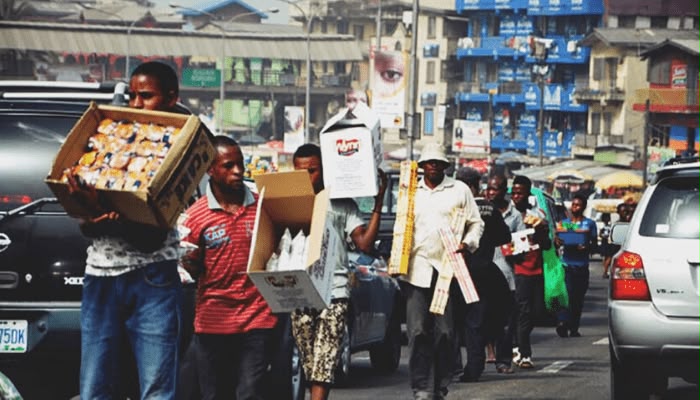
As vehicles crawl through major roads, hawkers weave confidently between rows of cars, displaying bottled water, soft drinks, snacks, fruits, newspapers, phone chargers, power banks, umbrellas, tissues and household items.
What appears to be an ordinary traffic jam quickly transforms into a bustling marketplace , in Lagos, traffic is more than a transportation challenge—it has become an economic opportunity.
The city’s notorious congestion has unintentionally created one of Nigeria’s largest informal marketplaces.
Major routes such as Third Mainland Bridge, Oshodi, Ikorodu Road, Apapa-Oshodi Expressway and the Lagos-Ibadan Expressway regularly become centres of commercial activity.
Instead of leaving their vehicles to shop, motorists simply lower their windows and purchase what they need and within seconds, a transaction is completed before the traffic begins moving again.
This unique roadside economy exists because it offers convenience.
Long hours spent in traffic mean commuters often become hungry, thirsty or remember essential items they forgot to buy before leaving home, hawkers take advantage of these moments by bringing products directly to customers.
The result is a marketplace without shops, where the road itself becomes the point of sale.
The business behind Lagos traffic also reflects the resilience and entrepreneurial spirit of many resident, faced with rising living costs, unemployment and limited economic opportunities, countless people have turned to roadside trading as a source of income.
For many families, the money earned from selling in traffic pays for food, children’s education, rent and other daily expenses.
Success in this line of work depends on understanding traffic patterns, choosing products that sell quickly and serving customers before vehicles move again.
Interestingly, the traffic economy extends beyond the hawkers seen on the roads.
Behind every trader is a network of wholesalers, suppliers, transporters and manufacturers whose businesses also benefit from roadside sales.
A bottle of water, a packet of biscuits or a phone charger sold in traffic represents a chain of economic activity involving several people, this way, Lagos traffic supports not only street traders but also a wider informal business ecosystem.
Despite the opportunities it creates, earning a living in traffic is far from easy. Hawkers spend long hours under the scorching sun and heavy rain while carrying heavy loads from one vehicle to another.
They constantly face the danger of accidents as they navigate moving cars and motorcycles.
At times, enforcement officials clear major roads to discourage street trading, forcing many traders to relocate or lose their goods.
Yet, despite these challenges, many return to the roads each day because the business remains their primary source of livelihood.
The existence of this thriving roadside economy also raises important questions about urban development and employment.
While efforts to reduce traffic congestion continue through road expansion, transport reforms and infrastructure projects, fewer people consider how these improvements could affect those whose livelihoods depend on gridlock.
For thousands of roadside traders, smoother traffic may reduce the number of potential customers they encounter each day,
lagos traffic is often described as one of the city’s greatest challenges, but it has also become a symbol of adaptability and survival.
Where some people see wasted hours, others see an opportunity to earn an honest living.
The movement of goods between stationary vehicles demonstrates how necessity can inspire creativity in even the most difficult circumstances.
The business behind Lagos traffic tells a story that goes beyond congestion. It reveals the determination of ordinary people to create opportunities where none seem to exist. Although no city aspires to be known for its traffic, Lagos has shown that even in the middle of gridlock, commerce never truly comes to a stop.