By Ruth Odutayo
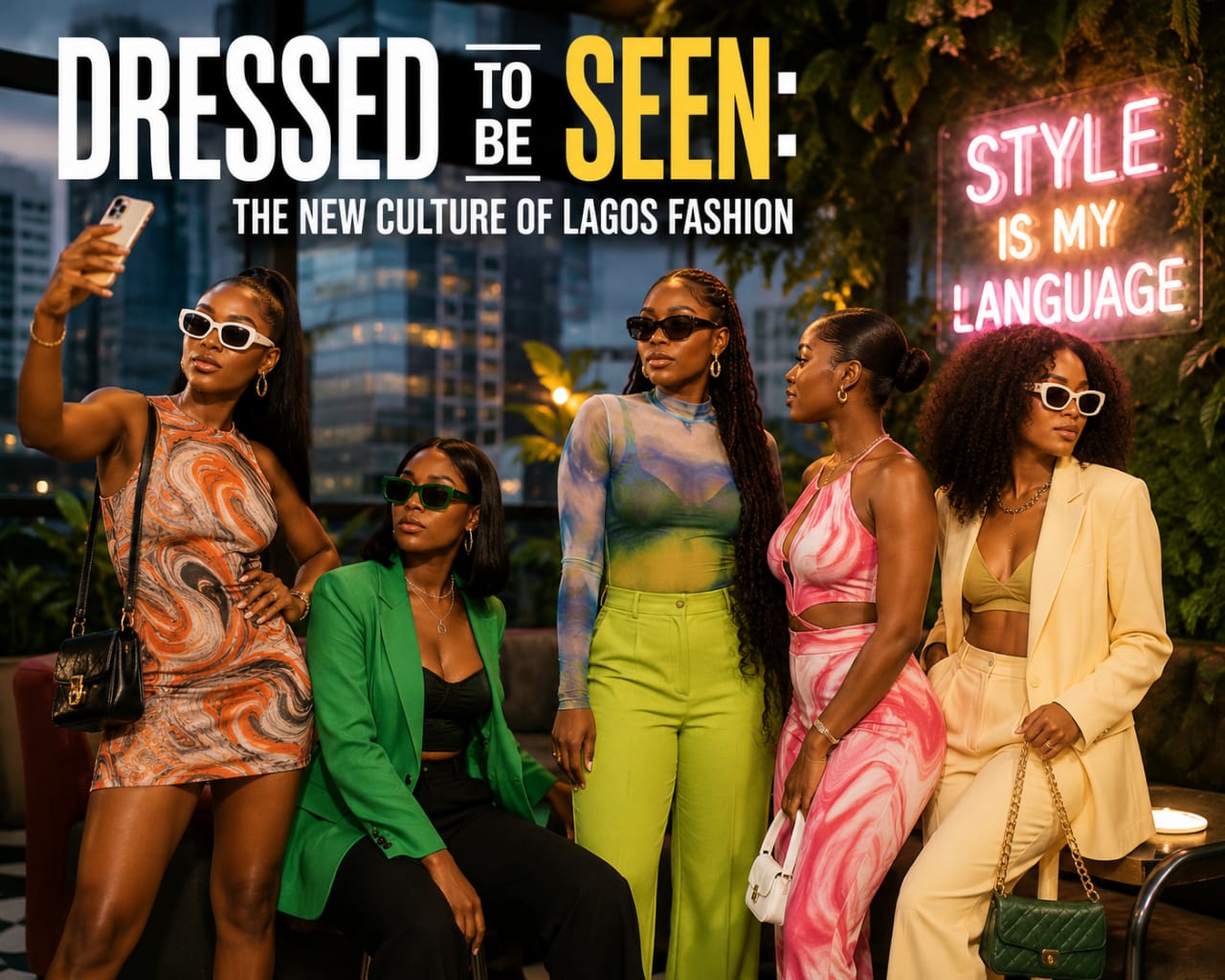
As the sun disappears over Lagos and the city begins to glow under the lights of restaurants, lounges, clubs and event centers, another side of the city comes alive.
Young people step out in carefully selected outfits, adjusting their clothes, checking their reflections and taking one last look at their appearance before stepping out.
For many, going out is no longer simply about having fun. It has become an opportunity to make a statement.
In Lagos, fashion has increasingly become part of the entertainment experience.
From birthday parties and concerts to weddings, club nights and social gatherings, what people wear has become almost as important as where they are going.
A simple night out can turn into a competition of creativity, confidence and personal style.
The rise of social media has made this culture even stronger. With smartphones constantly capturing moments, people know that their outfits may appear online within minutes.
A person who attends an event today could find their picture on Instagram or TikTok tomorrow, turning an ordinary outfit into a public statement.
This has created what many young Lagosians now consider a fashion rule: if you are going out, you must dress for the camera.
The influence of celebrities and fashion influencers has also changed the way people approach their appearance.
A celebrity’s outfit can quickly become a trend, while a fashion influencer can introduce thousands of followers to a new style overnight.
Young people often recreate these looks, adapting them to their own personalities and budgets.
For some, this means shopping for new clothes.
For others, it means visiting a tailor, borrowing from a friend or searching through thrift markets for affordable pieces that can be transformed into something unique.
Behind this growing fashion culture is a network of people making a living from the desire to look good.
Tailors and designers receive orders for customized outfits, while stylists help clients put together the perfect look.
Makeup artists prepare faces for the camera, hairstylists create dramatic finishes and accessory vendors complete outfits with bags, shoes, jewelry and other details.
Even thrift sellers have found a place in this fashion economy. With creativity, an inexpensive piece of clothing can be styled to look completely different.
For many young people, thrift shopping has become more than a way to save money.
It is an opportunity to experiment with fashion without spending too much.
The pressure to look fashionable, however, is not always easy.
For some young people, social media has created unrealistic expectations about how they should appear.
Seeing beautifully dressed people online can make others feel pressured to keep up, even when they cannot afford expensive clothes or accessories.
The desire to look perfect can sometimes turn fashion into a source of financial pressure.
Yet, beneath the pressure lies something more meaningful. Fashion gives people a way to express who they are without saying a word.
A bold color can represent confidence. A traditional outfit can celebrate culture.
A carefully chosen accessory can reflect personality.
Even a simple outfit can communicate comfort, creativity or individuality.
In Lagos, fashion is therefore no longer restricted to runways and fashion shows.
It is found in streets, parties, campuses, concerts and social media feeds.
It moves with the city and changes with every new trend.
The fashion after dark tells a story about a generation that wants to be noticed, remembered and understood.
For many young Lagosians, dressing up is not simply about wearing clothes.
It is about creating an identity and presenting it to the world.
And as the city continues to dance through the night, one thing remains certain: before the music begins and before the cameras start flashing, Lagos has already made one decision.
It is going to look good while doing it.