The Director-General of the National Institute for Legislative and Democratic Studies (NILDS), Prof. Abubakar Sulaiman, has urged the Federal Government to expedite action on the 2025–2029 National Development Plan for proper planning.
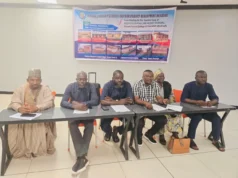
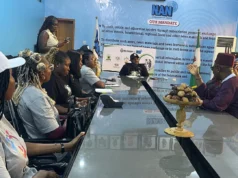
Sulaiman made the call on Monday in Abuja at the opening of a one-day seminar on the implementation of the Federal Government’s 2024 budget.
The News Agency of Nigeria (NAN) reports that the seminar was organised by NILDS in collaboration with the Nigerian Economic Society (NES).
“This seminar would help to provide insight on the kinds of challenges to anticipate for the 2024 fiscal year, contextualise the implications for implementing the 2024 budget, and make recommendations on the way forward.
“I wish to use this opportunity to call on the Federal Government to commence the process of providing a successor document for the National Development Plan (2021-2025), which currently serves as the nation’s medium-term economic blueprint.
“As it stands today, the Renewed Hope 8-Point Agenda of the present administration has yet to transit itself as a political party document; ensuring it is positioned as a medium-term development document for the country from 2025 to 2029 would be vital.
“The future of an effective plan-budget link will also require legislating national development plans and providing legislation upon which the gender, youth, and inclusion perspectives of the budget can be anchored,” Sulaiman said.
The professor said that budget implementation was as successful as the national public procurement process as contained in the Public Procurement Act (PPA).
He said it would be vital for government agencies to initiate the relevant process for executing projects and programmes provided for in the 2024 budget to avoid delays in implementation.
The director-general said that the annual budget remained a vital tool for the national development of the country.
He, however, said that the macroeconomic assumptions upon which the 2024 budget was premised already indicated the challenges for the implementation of the 2024 budget.
Sulaiman said that the actual figures for real GDP, inflation, exchange rate, and crude oil production already show that the 2024 budget would be implemented in the context of a difficult domestic and global macroeconomic environment.
In his remarks, the President of NES, Prof. Adeola Adenikinju, said that the annual budget was the symbol of the economic direction of the country in a year.
He said that the 2024 budget was predicated on a total expenditure of N28.78 trillion with a projected revenue of N19.7 trillion, implying a budget deficit of N10 trillion.
Adenikinju said that other key parameters of the budget included non-debt expenditure of N8.76 trillion, debt service expenditure of N8.2 trillion, and capital expenditure of N9.99 trillion.
“More importantly, the budget was predicated on a number of assumptions about key parameters.
“Oil price per barrel: $77.96; oil production per day: 1.78 million barrels per day; GDP growth rate: 3.88 percent; inflation rate: 21.4 percent; and exchange rate: N800/dollar.
“As we all know, two months down the line, nearly all these parameters have changed significantly, which is likely to impact the actual revenues and expenditures of the government, with likely effects on the capacity to implement the 2024 budget as passed,” he said.
Adenikinju said that the seminar would shed light on the issue of 2024 budget implementation and suggest the best possible ways to address it.
Also, the Chairman of the House Committee on Public Accounts, Rep. Bamidele Salam (PDP-Osun), said there was a need to review Nigeria’s budgeting system.
He said that the envelope system did not augur well for a developing nation like Nigeria, calling for a system that allowed the country to identify its priority needs and allocate adequate funds to them.
The lawmaker explained that about 40 percent of the funds allocated to various projects in the budget were either wasted or stolen, calling for a change in the system.(NAN)