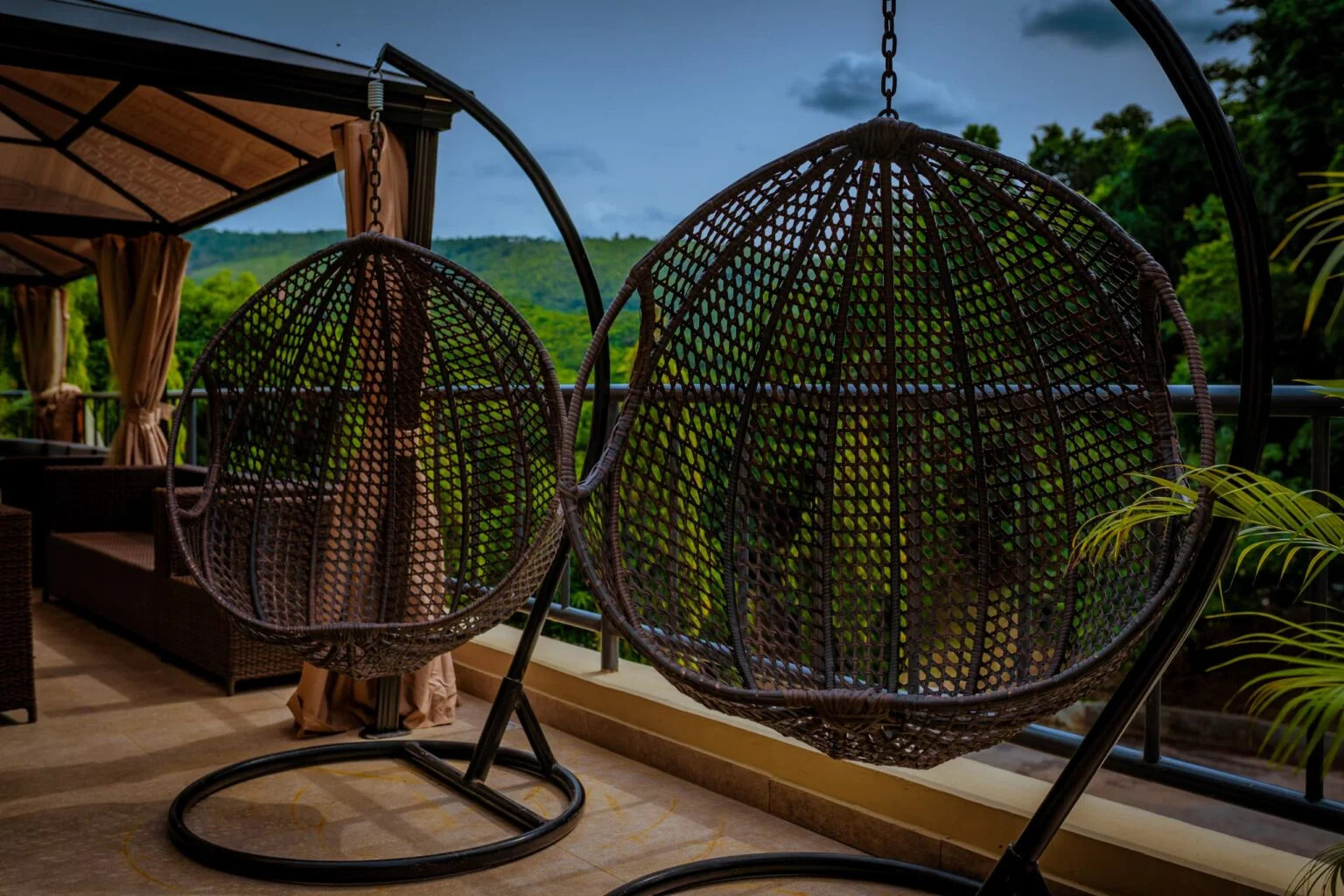
Beyond the famous meeting point of warm and cold springs, journalists attending a media immersion at Ikogosi Warm Springs Resort in Ekiti encountered a different story unfolding across the sprawling tourism asset.
It is one of deliberate investment, renewable energy, local job creation and a long-term vision aimed at redefining destination tourism in Nigeria.
The atmosphere is calm and serene, the smell of wet earth and vegetation hangs lightly in the air, particularly after in the early morning and after a rainfall.
Staff members greet visitors warmly and meals feel less like hotel cuisine and more like home-cooked food.
Away from the spring itself, hiking trails wind through vegetation rich with different scents and plant species, while recreational facilities such as five-a-side football pitches, volleyball, basketball and badminton courts reflect efforts to broaden the visitor experience.
The resort’s famous Tree House, decorated with board games on tables, offer another attraction. Rock speakers, not only add to the ambience but also provide music across the surrounding environment while flowerpot speakers deliver sound within the structure itself.
For many visitors, however, the most significant story at Ikogosi may not be what is visible on the surface but the business model quietly taking shape behind the scenes.
Speaking during an engagement with journalists, the General Manager of Glocient Hospitality, Lanre Balogun, says the company’s objective is not merely to operate a resort but to transform neglected tourism assets into sustainable businesses capable of generating economic and social value.
According to Balogun, Glocient Hospitality, the hospitality subsidiary of Cavista Holdings, took over a facility that was largely uninhabitable in 2022.
Balogun notes that every aspect of the transformation was executed by Nigerians.
“If you had been here four years ago, Ikogosi was not a place that was habitable.
“It will interest you to know that every transformation you see here is done by Nigerians, Nigerian expertise, Nigerian skill, Nigerian artisans, no experts. It was done by us,” he says.
His remarks reflect a recurring theme throughout discussions at the resort – the belief that local expertise and long-term capital – can unlock the value of Nigeria’s tourism sector.
That philosophy appears to influence investment decisions at Ikogosi.
This is evident in the resort’s energy strategy.
Like many businesses across Nigeria, Ikogosi faces mounting energy costs arising from reliance on diesel-powered generators.
Balogun discloses that diesel expenses alone reached more than N46 million in a single month at the height of recent energy price increases.
“We spent over 46 million on diesel alone.
“That is not sustainable,” he says.
The challenge prompted the company to invest about 200,000 dollars in renewable energy infrastructure, including solar panels, battery systems and supporting facilities.
According to him, the investment now provides approximately 12 hours of renewable energy daily and is projected to save the resort more than N500 million annually.
Balogun says Glocient Hospitality is investing more than two million dollars in the development of its Camp A.
The project will add new guest rooms, staff accommodation, expanded laundry facilities and additional renewable energy capacity.
The resort currently operates Camp B and Camp C, where visitors can access villas, including a presidential suite designed to attract premium leisure and corporate travellers.
According to Balogun, additional room capacity has become necessary because the resort is increasingly turning away group bookings.
“The businesses that we’re getting is 100, 120, 150 rooms and they don’t want double occupancy,” he says.
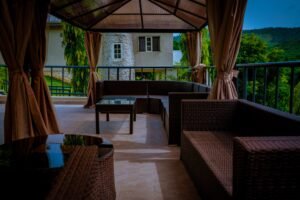
The expansion is expected to strengthen Ikogosi’s position as a Meetings, Incentives, Conferences and Exhibitions (MICE) destination.
While tourism assets are often evaluated through profitability metrics alone, discussions at Ikogosi highlight another dimension: community impact.
The resort currently employs more than 230 workers, with about 60 per cent drawn from host communities and nearly 70 per cent being women.
Balogun says the transformation has extended beyond hospitality operations.
According to him, young people who previously lacked stable livelihoods have been trained in electrical works, plumbing, tiling, landscaping and maintenance.
One story in particular appears to resonate with participants.
Balogun recounts how a former unemployed youth from the community was able to improve his standard of living after receiving training and employment opportunities linked to the resort’s redevelopment.
Such examples underscore a broader argument increasingly advanced by tourism stakeholders: that destination development can serve as a tool for rural economic transformation.
The investment strategy also extends to agriculture and environmental sustainability.
Vegetables consumed at the resort are grown on-site, while food waste is used to support livestock operations.
He says future plans for the resort includes greenhouses, expanded farming activities and visitor experiences that allows guests engage directly with food production.
Security, another concern often raised by potential visitors, also featured prominently during discussions.
Balogun acknowledged national security challenges but says that perceptions are sometimes amplified beyond reality.
“We have security challenges. However, it’s not as bad as people portray it on social media,” he says.
To reinforce visitor confidence, the resort maintains extensive security arrangements involving security personnel; civil defence officers, hunters, police in the resort and military support within surrounding areas.
For tourism analysts, Ikogosi’s experience offers insight into a broader challenge confronting Nigeria’s tourism industry.
Many destinations possess significant natural attractions but struggle with inadequate infrastructure, energy costs, weak investment and poor maintenance.
Balogun says reversing decades of decline requires patience and a willingness to prioritise reinvestment over immediate returns.
“Our goal is not short-term.
“We are very deliberate and intentional.
“Every step that we take is a step forward in achieving sustainability and profitability,” he says.
Facility Manager at the resort, Okon John, explains that solar installations currently powers the entire resort.
He says the system includes an 80-kilowatt solar installation and a 480-kilowatt-hour battery bank capable of supporting operations for several hours after sunset.
“All the resort is on the system currently,” he says.
John adds that guests rarely notice transitions between power sources because the system automatically switches between solar, battery storage, grid electricity and generators when necessary.
Interestingly, Stephen Ademiluwa, Communications and Community Engagement Manager of Glocient Hospitality, describes the national grid as a backup rather than the primary source of power — a reversal of the traditional energy model adopted by many hospitality businesses.
As part of a broader expansion, the company plans to scale the renewable energy system to one megawatt
The expansion itself illustrates another aspect of the resort’s long-term investment approach.
That philosophy appears shared by the resort’s stakeholders as Uche Ibemere, Director, Communications, Cavista Holdings, notes during the engagement, “We are here for the long haul.”
Whether the model ultimately succeeds may depend on factors beyond the resort’s control, including economic conditions, infrastructure and national perceptions.
Yet on a rainy evening in Ikogosi, amid the scent of fresh grass, the sounds from hidden rock speakers and the steady hum of a resort increasingly powered by the sun, there are signs that a different approach to tourism development is being tested — one built on patience, sustainability and belief in local capacity. (NAN)