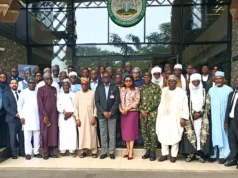
EU reiterates commitment to engaging journalists in capacity building, AI
On Wednesday, the European Union in Nigeria reiterated its commitment to engaging diplomatic journalists in capacity building and artificial intelligence training, amongst others.
The Deputy Ambassador of the EU to Nigeria, Mr. Massimo De Luca, reiterated the commitment in Abuja at a breakfast interface with journalists covering the diplomatic beats.
According to De Luca, the EU needs the media to help connect with the grassroots because of the vital role it plays in bringing the EU and the people closer through their ability to connect and project the views of both sides.
“The EU needs the media to connect more with the people in the country, and investing in the media is the starting point.
“It is not easy for the bloc to reach the grassroots better by knowing what they think, feel, and do without the media.
“The European Union needs the media,” he said.
The EU ambassador added that with the inclusion of the media in the mission’s mandate, the people at the grassroots could feel the impact of the bloc on the Nigerian economy.
The envoy stated that the bloc is Nigeria’s largest trading partner, accounting for roughly a third of Nigerian exports and a quarter of its imports, adding that businesses operating in Nigeria are crucial contributors to the local job market.
The companies, he maintained, have shown a strong commitment to Nigeria’s economic growth, with combined investments exceeding two billion euros. (NAN)

Contains information related to marketing campaigns of the user. These are shared with Google AdWords / Google Ads when the Google Ads and Google Analytics accounts are linked together.
90 days
__utma
ID used to identify users and sessions
2 years after last activity
__utmt
Used to monitor number of Google Analytics server requests
10 minutes
__utmb
Used to distinguish new sessions and visits. This cookie is set when the GA.js javascript library is loaded and there is no existing __utmb cookie. The cookie is updated every time data is sent to the Google Analytics server.
30 minutes after last activity
__utmc
Used only with old Urchin versions of Google Analytics and not with GA.js. Was used to distinguish between new sessions and visits at the end of a session.
End of session (browser)
__utmz
Contains information about the traffic source or campaign that directed user to the website. The cookie is set when the GA.js javascript is loaded and updated when data is sent to the Google Anaytics server
6 months after last activity
__utmv
Contains custom information set by the web developer via the _setCustomVar method in Google Analytics. This cookie is updated every time new data is sent to the Google Analytics server.
2 years after last activity
__utmx
Used to determine whether a user is included in an A / B or Multivariate test.
18 months
_ga
ID used to identify users
2 years
_gali
Used by Google Analytics to determine which links on a page are being clicked
30 seconds
_ga_
ID used to identify users
2 years
_gid
ID used to identify users for 24 hours after last activity
24 hours
_gat
Used to monitor number of Google Analytics server requests when using Google Tag Manager