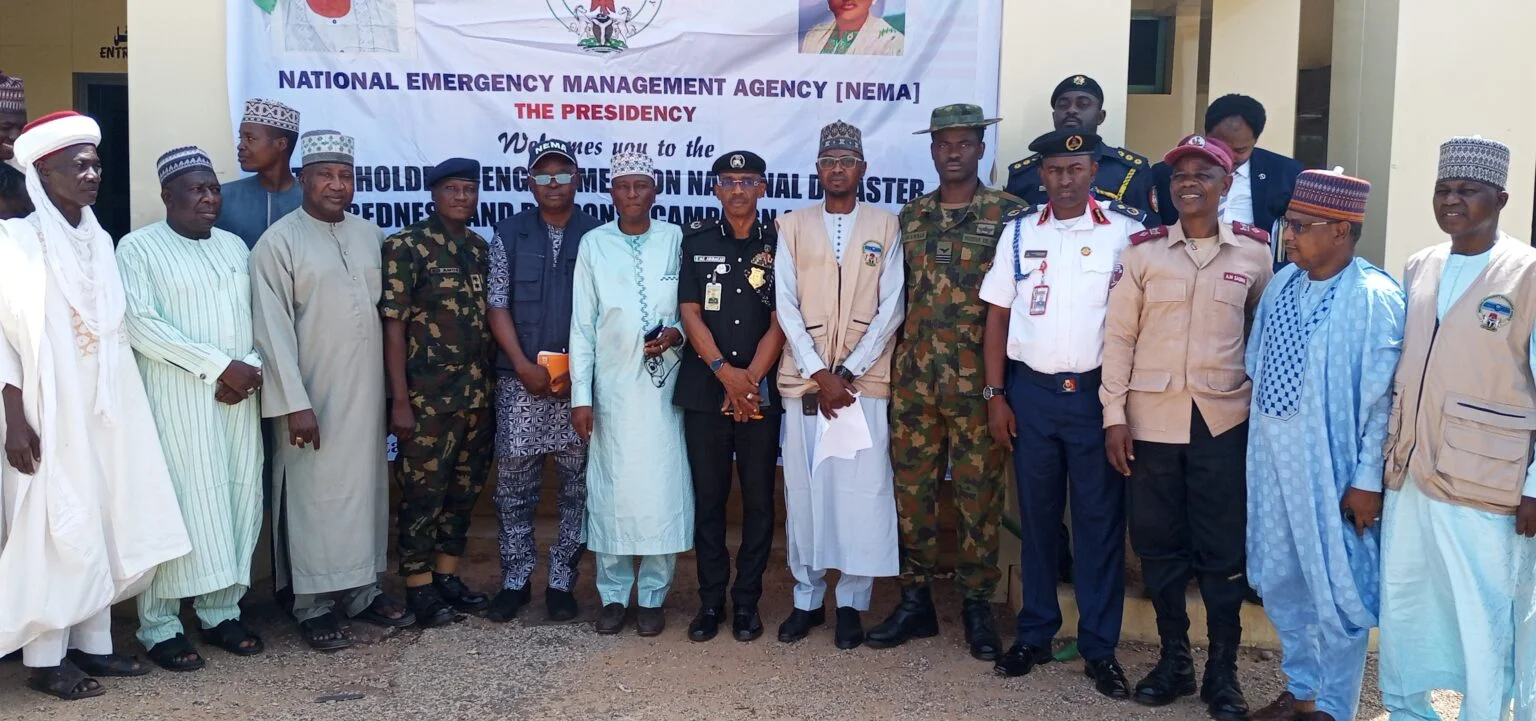
The 8 Division of the Nigerian Army, Sokoto, has stationed boats near Goronyo Dam to support unforeseen flood emergencies as part of its commitment to disaster response mechanisms in the state.
Col. Samuel Amos disclosed this in his goodwill message on Wednesday during the 2026 National Preparedness and Response Campaign on Flood Disaster and Related Hazards stakeholders’ meeting in Sokoto State.
The News Agency of Nigeria (NAN) reports that the programme was organized by the National Emergency Management Agency (NEMA) with support from SAHEL Agriculture and Nutrition Consultant firm.
In her address, the Director General of NEMA, Mrs Zubaida Umar, said that 132 Local Government Areas across Nigeria were within high flood-risk zones, while 148 LGAs in 14 states had been classified as moderate flood-risk areas.
Represented by the Head of Operations, Sokoto Zonal Office, Mr Tukur Abubakar, Umar identified Sokoto as one of the high-risk states, highlighting Goronyo, Gudu, Kebbe, Kware, Sabon Birni, Silame, Sokoto North, and Wamakko local government areas as places requiring increased attention.
According to her, the July to September period remains the most critical phase, with possible overflow of the Rima River posing threats to riverside communities, farmlands, and critical infrastructure.
Umar stated that NEMA developed the 2026 Climate-Related Risk Management, Preparedness and Mitigation Framework after reviewing forecasts from the Nigerian Meteorological Agency (NiMet) and the Nigeria Hydrological Services Agency (NIHSA).
“The framework focuses on strengthening the capacity of local responders, conducting simulation exercises, ensuring compliance with rainfall and flood advisories, prepositioning relief materials, assessing infrastructure, and developing community evacuation plans.
“We are appealing to traditional rulers, religious organizations, women and youth groups, the media, and private sector stakeholders to support early warning dissemination, because disaster management requires the involvement of everyone.
“Preventing avoidable flood disasters requires a whole-of-society approach,” she insisted.
Umar commended SAHEL Agriculture and Nutrition Consultant firm for its support on emergency risk reduction, early warnings, and other disaster mitigation and response strategies.
In his remarks, the Executive Secretary of the Sokoto State Emergency Management Agency (SEMA), Prof. Abubakar Junaidu, emphasized the importance of collective action in protecting lives, livelihoods, and critical infrastructure from flood disasters.
Junaidu noted that Sokoto State had experienced various degrees of flooding in recent years, resulting in the destruction of houses, farmlands, roads, and other socio-economic assets, thereby affecting the livelihoods of vulnerable members of society.
He explained that forecasts from relevant agencies, including NiMet and NIHSA, indicated possible significant rainfall and flood occurrences in some parts of the country, making proactive preparedness and mitigation measures necessary.
He stressed the need for early warning messages to reach communities in a timely and understandable manner, calling on LGAs, traditional institutions, religious leaders, community-based organizations, and the media to intensify awareness campaigns on flood prevention and preparedness.
Participants at the meeting included government officials, traditional and religious leaders, security agencies, development partners, civil society organizations, and media practitioners, who gathered to strengthen coordination and improve flood preparedness across Sokoto State. (NAN)