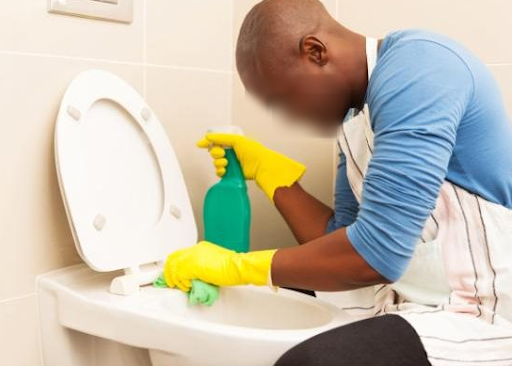
So much has been heard about house wives? Almost nothing has been heard about house husbands. Is it because there are none in Nigeria? Chika Mefor-Nwachukwu queries…
Recently, a story of a Nigerian man, Simon Momoh who was unlawfully detained in Malaysia for 40 days for driving under the influence of alcohol, hit the social media.
Momoh, married to a Malaysian auditor, Low Kar Hui was arrested on March 15, 2021. He had pleaded guilty and paid the RM12,000 fine he was given, as well as served his one-day jail sentence.
However, Momoh who had a valid long-term spouse visa was not released but was rather transferred to the Kajang Prison on March 16. He was then transferred to the Immigration Detention Centre in Semenyih on April 7 where he faced the possibility of deportation to Nigeria.
His long-term spouse visa, which was valid until Oct 14 next year, was revoked on April 9 as per Section 9 of the Immigration Act, which allows the Immigration director-general to do so.
Momoh was deemed as a prohibited immigrant under the Act, and his wife was told to organize flight tickets for his deportation to his country of origin.
Momoh through his lawyers fought and challenged the Immigration Department’s orders to deport him and after 40 days of being arrested, was released.
Nigerians were quite elated after his release. However what becomes the source of the debate was the fact that he was a stay-at-home father (house husband) for his two children while his wife, was the sole breadwinner.
Even the fact that Momoh was not allowed to work due to the restrictions in a long-term spouse visa did not deter those who were set on criticizing him.
“How can a man choose to be a liability?” one of the comments stated.
“Very disgusting, stay-at-home dad. I can’t survive without putting my body to work even though I’ve got millions in my account.”
Another comment stated that a man staying at home and allowing his wife to cater for the family was not part of the culture in Africa and urged Nigerians to ‘look before they leap out of Nigeria’.
“Stay-at-home father for two kids while his wife is the breadwinner???!!! Ha! This is a very serious case. This is not Yoruba, Ibo, Hausa, or even any African culture. He cannot work? Imagine doing dishes, cooking, doing diapers, house cleaning while wifey goes to bring home the pay… gosh..,” it said in disgust.
But some others have spoken in his favor. A comment simply revealed that Momoh’s stay at home would help the family financially as they will save a lot of money they would have paid domestic staff.
“Stay-at-home dad, yes. That is a job on its own. Those of you condemning him are those who think your wives who stay at home looking after your children do nothing. Do you know the money he saves for the family? Cleaning, washing, and taking care of his kids? He is doing a job too. Know that,” she told the opposing side.
Another comment, supporting the earlier comment added, “a stay at home dad isn’t being lazy or idle. Besides, his visa type doesn’t permit him to ‘work’. If he was ‘working’ and they employed nanny employed to cook and clean, would you still say that nanny isn’t working and being lazy and idle?.”
The comment which clearly came from a woman, brought the women angle to the argument, “that lots of women do all the cooking and cleaning in Nigeria does not mean that structure works for everyone everywhere! Give stay-at-home parents the credit they deserve. It’s not easy looking after kids and the home! I know from experience as I’m a mum of three myself.”
A house husband (alternatively, full-time father, stay-at-home father, house dad, or house-spouse) is a father who is the main caregiver of the children and is generally the homemaker of the household.
Now, is there such fathers in Nigeria? “Of course they exist,” George Ifeanacho, a public analyst said.
“However, they are in hiding. Because of the societal role ascribed to both genders; where a man is to provide for his family while a woman is to take care of the children. Society expects a man to get a job that takes him out of the house in the morning, and brings him home later in the day. The wife cooks and cleans and takes care of the children. A man according to culture and norms, has no business messing with the day-to-day running of the home or even tending to the children.”
Also speaking, a stay-at-home dad who lost his hotel job during the COVID-19 pandemic last year, Effiong Peters revealed that hiding about being a stay-at-home or house husband is the best thing, in a country with people with biased minds.
He revealed that since he lost his job, he had begun handling the affairs at home because his wife who is a banker had started staying extra hours in her office due to the fact that she was given added responsibilities after the mass sack of banks workers last year.
He stated that he cooks clean and even goes for school runs adding that no one except his wife knows that he has turned from someone who had a 9 to 5 job to a stay-at-home dad.
Peters confessed that the arrangement which came about out of necessity now suits him and his wife and they have agreed it will stay that way until their children are of age.
“It isn’t the usual thing but it is working for us. Eventually, I will find something doing. I am using this time to plan too,” he said.
While lost of job, and personal decision, had turned Peters into a house husband, other reasons men become stay-at-home dads could be chronic illness, disability, or part-time job.
There are no known statistics of the number of stay-at-home dads in Nigeria. However, in The United States of America, 189,000 married men with children under the age of 18 identified themselves as stay-at-home fathers, according to a U.S Census Bureau report in 2012.
One common problem for stay-at-home dads is the stereotypes and stigmas they face which could include judgments about their masculinity and work ethic, thus the reason for silence and secrecy whenever any father is one.
Speaking further on the issue, a marriage counselor, Stephanie George stated that because the norm is that a man wears the trousers and provides for his family, society do not look kindly on househusbands.
“ They will say that he is doing that because he is out of job or lazy. They will even say that a full-blooded man will not seat at home and allow the woman he married, fend for the family.
“ The woman in the relationship is not left out too. They will say that she is the one that wears the pant in the family and decides whatever happens. Because she is a breadwinner, she has now taken the power of being the head of the family,” she explained.
She added that many will say that stay-at-home fathers are not seen to be a strong role model for their children because according to them, they allowed their women to take their place.
However, George revealed that the benefits of having stay-at-home fathers abound if the decision to stay at home was a mutual agreement by the couple. She stated that children who spend quality time with their fathers are more likely to grow up more confident and stable in their adult life.
She added that it will create a strong bond between the father and the children at the same time strengthen the relationship between the wife and the husband.