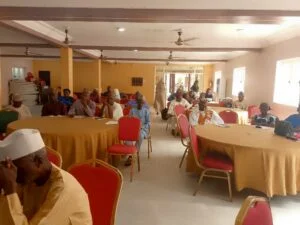
Kaduna, Jan. 29, 2026(NAN) Stakeholders in the education sector in Kaduna State on Thursday converged to commemorate the 2026 International Day of Education.
The stakeholders celebrated the event under the theme: ‘Education is a Human Right, a Public Good and a Public Responsibility – the Power of Youth in Co-creating Education’.
The event the engaged participants to dialogue on strengthening inclusive, equitable and accountable education through youth participation and collective responsibility.
The News Agency of Nigeria (NAN) reports that the programme was organised by; Kaduna Basic Education Accountability Mechanism
(KADBEAM), Kaduna Local Governments Accountability Mechanism (KAD-LGAM) with support from Partnership for Learning for All (PLANE), through the Beta Nigeria Campaign.
It brought together government officials, development partners, civil society organisations, Persons With Disabilities (PWDs) parents, communities, pupils and the media.
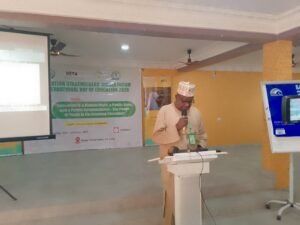
Representing the Kaduna State Ministry of Education, Mukthar Maude, the Director of Public Schools, said education was a right that must be protected, funded and delivered collectively by government, partners, communities and families.
He stressed that young people should be recognised not only as beneficiaries but as active partners shaping inclusive, relevant and future-ready learning systems across the state.
Maude stressed that policies, ideas and innovations were essential to aligning education delivery with present realities and future aspirations, while strengthening access, quality, equity and accountability.
Hauwa’u Muhammad of the Kaduna State Universal Basic Education Board (KADSUBEB), said leadership within basic education was driving productive integration of ideas and partnerships to improve learning outcomes for learners.
She explained that collaboration across institutions remained critical to delivering quality basic education and supporting teachers and learners effectively.
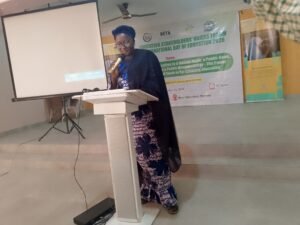
The Director-General of the Kaduna State Schools Quality Assurance Authority (KSSQAA) Prof. Abubakar Zaria, acknowledged progress made in education delivery while noting that challenges in quality assurance and learning outcomes persist.
Zaria, represented by Mercy Kude, Director, Private Schools Department, reaffirmed the authority’s commitment to promoting excellence, supporting educators and fostering a culture of continuous improvement across public and private schools.
The Team Lead of PLANE, Mrs Diana Agabi, described education as a cornerstone for empowering individuals and transforming communities, applauding the diversity of stakeholders present at the forum.
Agabi, represented by Musa Jimoh, PLANE’s Results and Learning Manager, said the gathering of ministries, agencies, CSOs, SBMCs and the media demonstrated shared commitment to improving education outcomes in Kaduna.
Agabi urged the stakeholders to recommit to inclusive and equitable quality education, stressing that sustained collaboration could overcome existing challenges and expand opportunities for every child.
Friday Odey of Beta Nigeria Campaign, said the campaign focused on evidence-based advocacy to amplify collective voices on education reforms, teacher quality and learning outcomes.
He noted that while progress had been made, stronger societal engagement was needed to secure the future of education and young people, particularly in states with high out-of-school populations.
Dr Ezra Angai, Coordinator of the Reaching Out-of-School Children Project (ROOSC) in Kaduna, said the meeting was timely, as Kaduna continued to implement wide-ranging education reforms.
He disclosed that while earlier data indicated over 700,000 out-of-school children, recent mapping showed the figure had reduced to under 200,000 at the basic education level.
Angai attributed the progress to government interventions, including construction of new schools, renovation of existing ones, accelerated learning centres and teacher development programmes.
He added that the holistic reforms addressed access, learning outcomes and system strengthening, positioning Kaduna as a leader in education reform efforts nationwide.
Alheri Waje, Lead of the Education Cohort of KAD-LGAM, said the event provided a platform to reflect on data, amplify youth voices and strengthen accountability.
Waje said education remains a fundamental human right, a public good and a shared responsibility, aligning the 2026 International Day of Education with Kaduna State’s ongoing education reform agenda.
Presenting an evidence-based overview of Kaduna’s education sector, Waje acknowledged notable progress alongside persistent challenges in learning outcomes, teacher availability and equitable access to quality education.
She added that data presented showed over 768,000 children of basic school age remain out of school, mostly in rural and hard-to-reach areas affected by poverty, insecurity, distance and weak retention systems.
Waje said the presentation underscored poor learning outcomes and high learning poverty, linked to overburdened teachers, inadequate infrastructure and limited access to water, sanitation and learning materials.
She added that the conditions negatively affect attendance, retention, learner health and dignity, stressing the urgency for coordinated and sustained reforms across the education sector.
She, therefore, recommended targeted literacy programmes, continuous teacher training, incentives for rural postings and community awareness campaigns to boost enrolment, especially for girls.
Waje equally recommended upgrading of school infrastructure, increasing education funding, providing water and sanitation facilities, strengthening community engagement and aligning policies with global standards and the Sustainable Development Goals.
Earlier, Mr Simeon Olatunde, the acting Secretary of KADBEAM, said objective of the engagement was to provide a platform for youth, teachers, parents, School Based Management Committees and Persons with Disabilities to share experiences
and identify Kaduna-specific education challenges.
Olatunde said the challenges include out-of-school children, teacher shortages (including female recruitment), and learning quality.
He added that the event’s objective was to co-create context-specific, evidence-based advocacy priorities with stakeholders and engage government, CSOs, experts, and media in dialogue to build political will.
“It is also to amplify stakeholders voices through media to sustain pressure on educational reform and
Produce advocacy briefs capturing agreed priorities and actions to inform follow-up with
MDAs, SUBEB, LGEAs, and oversight bodies,”he said.
NAN reports that the participants agreed that education remains central to human development, social mobility and economic growth, requiring sustained collaboration beyond government-led interventions.(NAN)