The North East Development Commission (NEDC) has announced plans to introduce electronic vehicles to ease challenges associated with intra- and inter-state transportation in the region.
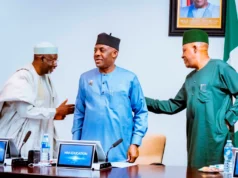
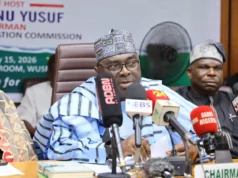
The Chairman of the reconstituted Governing Board of NEDC, retired Maj. Gen. Paul Tarfa, made the announcement shortly after he met with members of the board in Abuja.
The News Agency of Nigeria (NAN) reports that the meeting was the first after the board’s inauguration by Vice President Kashim Shettima in August 2023.
Tarfa said the move to embark on the e-mobility projects was to address transportation challenges faced by people in the region.
”We plan to embark on e-mobility projects, that is, electronic vehicles, to ease the challenges of transportation faced by people in the North East,” Tarfa said.
He also said the purpose of the meeting was to inform Nigerians of the giant strides the commission has made so far.
”Some of the key issues we discussed during the meeting were to ensure the completion of all the ongoing projects.
”Especially the six major road projects that are ongoing across Taraba, Gombe, Bauchi, Adamawa, Yobe, and Borno States, and we hope to complete them by Dec. 2024.
Tarfa also informed the gathering of the board’s commitment to key into the renewed hope agenda of President Bola Tinubu’s administration in keeping with his desire for the vulnerable Nigerians.
He, therefore, assured Nigerians of their determination to complete all the ongoing projects embarked upon by the commission.
Earlier, the Managing Director of the Commission, Mr. Mohammed Alkali, said the board had already approved the use of the electronic vehicles for inter-state mobility within the region.
Alkali further explained that the use of such vehicles would serve as a cost-cutting measure against gasoline-consuming vehicles.
The NEDC MD also announced plans to release three hundred thousand bags of rice for immediate distribution to support vulnerable communities in the region.
According to him,this is part of the commission’s efforts to support families in need due to the current increase in food prices.
”Some of the items we earmarked for distribution include Spaghetti, vegetable oil, Sugar, branded mats and blankets, male and female clothes, as well as children’s wear,” Alkali said (NAN)