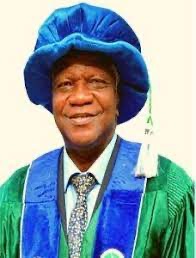
London, United Kingdom – In a recent national conference on the theme “Cattle Beyond Crisis: Interrogating The Cattle Resource in Nigeria,” Professor Adedeji Daramola, a leading expert in nomadic architecture and Deputy Vice Chancellor (Academic) of Caleb University, Imota, Lagos, called on the Nigerian federal government to consider implementing solutions outlined in a groundbreaking research report. The report, conducted at the Centre for Architectural Research and Development Overseas (CARDO) at Newcastle University, United Kingdom, and the University of Ilorin, presents core strategies to address the ongoing farmers-herders crisis in the country.
Prof. Daramola, whose report formed the basis of his PhD thesis under the supervision of Prof. Olorunfemi at the University of Ilorin’s Department of Geography, emphasized the need for peaceful coexistence between farmers and herders. The report analyzed various factors contributing to the conflict and predicted the current challenges resulting from the mishandling of the situation. It identified the existence of ungoverned spaces as a critical impediment to resolving banditry across the nation. Prof. Daramola stressed that meaningful resolutions could only be achieved by involving farmers and herders as key stakeholders, further noting that an economic approach was necessary to tackle the crisis effectively.
Drawing from his experience as a consultant to the United Nations Habitat, Prof. Daramola proposed the implementation of farmers and livestock insurance policies, citing successful examples from India, Ethiopia, and Kenya. He asserted that with appropriate steps and actions taken by both federal and state governments, the crisis could be resolved.
Dr. Rufai, another speaker at the conference from Usman Dan Fodio University in Sokoto, highlighted the cultural aspect of the conflict, stating that it should not be perceived solely as an elitist problem. The event also featured key presentations from Prof. Adeniyi Gbadegesin, former Vice Chancellor of Ladoke Akintola University, who emphasized the urgent need to address the incessant conflicts due to their significant economic implications.
Among the participants were Mr. Babajide Otitoju, Group Head of News and Public Affairs and Journalist Hangout at TVC Television, who endorsed ranching as a globally accepted standard for modern-day pastoralism. Prof. Wahab Egbeyemi SAN, the Vice Chancellor of the University of Ilorin, commended the conference theme and urged attendees to thoroughly explore the issue. Prof. Paul Ifabiyi, the Dean of the Faculty of Social Sciences and host of the conference, stressed the national concern surrounding the resolution of the farmers-herders conflict, outlining the immense losses incurred as a result of the violence.
Notably, representatives from Miyetti Allah and the wife of the Kwara State Governor, Ambassador Dr. Olufolake Abdurasaq, were present at the event. Alhaja Abibat Seidu, the permanent Secretary of the Kwara State Ministry of Tetiary Education, represented Ambassador Dr. Abdurasaq. Prof. Usman Raheem, the conference chairman, expressed enthusiasm for the positive responses from contributors and pledged to publish the conference findings for the benefit of Nigeria and the global community.
In a separate development, Caleb University has become the first private university in Nigeria to house the secretariat of the National Association of Architecture Students (NAAS). Following successful elections, Caleb University students secured key positions within the association, including the presidency. Justice Egwabor, the newly elected NAAS President, expressed gratitude for the historic achievement and highlighted the institution’s commitment to contributing to the growth of the association.
President Egwabor emphasized that Caleb University’s involvement in national affairs had been ongoing, stating that the institution’s Caleb University Association of Architecture Students (CUASA) had consistently displayed excellence, creativity, and strong leadership. He attributed their success to the leadership training received and the institution’s conducive environment. Egwabor expressed their desire to positively transform the association during their tenure at the national secretariat.
For media inquiries, please contact: Elvis Otobo, PhD Deputy Director, Public Relations, Protocol, and Marketing Email: [contact information]