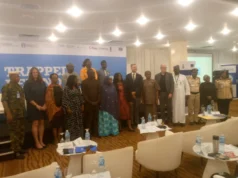
A Don, Dr Henrietta Onwuegbuzie, on Friday said that Nigeria’s growing internet penetration and mobile phone adoption had positioned the country to become a major hub for social commerce.
Onwuegbuzie, who is of the Lagos Business School, said this at the inauguration of the Digital Commerce Labs (DCL) programme organized by TikTok in collaboration with the International Chamber of Commerce (ICC) in Lagos.
The programme aims at helping Nigerian Small and Medium Enterprises (SMEs) scale their businesses, create jobs and access global markets through digital commerce.
Digital commerce is the buying and selling of goods and services through digital channels such as websites, apps, and social media platforms.
The don noted that digital platforms had lowered entry barriers for entrepreneurs, enabling businesses to start and scale with little capital.
She noted that consumers increasingly supported businesses that promoted sustainability, ethical practices, inclusion and community development.
“People no longer buy products alone; they buy values. Businesses that create positive impact are more likely to earn trust and long-term loyalty,” she said.
Speaking on the future of social commerce, Onwuegbuzie said many businesses failed because they focused on profit rather than solving genuine customer needs.
“A business that makes only money is a poor business. Entrepreneurs must focus on creating value and solving problems if they want to remain relevant and competitive,” she said.
The News Agency of Nigeria (NAN) reports that the DCL initiative is also supported by the National Information Technology Development Agency (NITDA) and the Lagos State Employment Trust Fund (LSETF).
It seeks to equip entrepreneurs with digital, financial and business management skills needed to compete in the evolving global economy.
Stakeholders at the programme’s inaugural community event in Lagos said strengthening SMEs would accelerate economic growth, reduce unemployment and expand Nigeria’s participation in digital trade.
Tokunbo Ibrahim, the Acting Head of Government Relations and Public Policy, TikTok Sub-Saharan Africa, said digital commerce was reshaping business growth across the region.
He noted that social commerce was helping entrepreneurs improve product visibility, connect with customers and influence purchasing decisions.
Ibrahim said TikTok’s partnership with ICC was aimed at ensuring that small businesses could fully participate in opportunities created by the digital economy.
The Director-General of NITDA, Kashifu Inuwa Abdullahi, said that digital platforms had evolved beyond entertainment to become powerful engines of economic growth.
Represented at the event, Abdullahi said strengthening digital literacy and talent development would help Nigerian entrepreneurs compete effectively in the global marketplace.
He commended TikTok and its partners for supporting local businesses through digital skills development and entrepreneurship programmes.
The ICC Deputy Secretary-General, Julian Kassum, said digital commerce offered a powerful pathway for inclusive growth, entrepreneurship and job creation.
Kassum said the programme would provide small businesses with tools and confidence to participate effectively in an increasingly digital marketplace.
Also speaking, an ICC representative, Mrs Onyi Anyadike, said the initiative was designed to empower SMEs to unlock growth opportunities and expand beyond their immediate communities.
According to her, strengthening SMEs ultimately translates into economic growth, job creation, increased tax revenue and reduced unemployment.
“SMEs are the backbone of every economy. When SMEs grow, they employ more people, contribute more taxes and strengthen the economy,” she said.
Anyadike said participants would receive training in financial literacy, digital literacy, data protection and other business management skills critical to long-term success.
A major highlight of the event was a creator economy panel where entrepreneurs shared how digital platforms helped them build successful businesses.
Founder of Ms Tobi Closet, Oluwatomi Anointing, said consistency and community building on TikTok helped her to transform a university side hustle into a thriving fashion business.
She urged entrepreneurs not to depend solely on viral content but to focus on customer engagement and relationship building.
“I posted products daily for months before making meaningful sales. Consistency helped customers trust my brand and eventually support it,” she said.
Founder of HealthKraft Africa, Dr Olawale Ogunlana, said credibility and authenticity are critical to building successful digital brands.
Ogunlana said TikTok enabled him to provide relatable health education content and expand services to medical professionals within and outside Nigeria.
He advised entrepreneurs to develop systems and structures capable of supporting business growth.
“You rise and fall to the level of your systems. Every business, no matter how small, needs processes that can support growth and sustainability,” he said.
Crochet entrepreneur, Kolade Mayowa, said digital platforms had enabled her to transform a childhood skill into a business that now trained and employed young women.
She said persistence, patience and skills transfer were central to building a sustainable enterprise.
Mayowa noted that entrepreneurship required resilience and a willingness to overcome challenges daily.
Speaking at the closing session, ICC Nigeria’s Inclusive Growth Lead, Mrs Bunmi Osuntuyi, described Nigeria as the first country to host the initiative, with similar programmes planned for Ghana and Kenya.
Osuntuyi urged entrepreneurs to take advantage of the opportunity by enrolling in the programme and applying lessons learnt to grow their businesses.
She said the initiative aligned with ICC’s global mission of making business work for everyone, every day and everywhere.
The organisers said participants would have access to online learning modules and virtual workshops beginning in July, while market-ready businesses would also be linked to LSETF’s funding ecosystem.
They expressed confidence that the programme would strengthen entrepreneurship, boost digital trade and contribute to Nigeria’s economic development. (NAN)