Urgent action is needed to save millions of children from malnutrition in the North East, Mr Mohamed Fall, Nigeria’s Resident Coordinator, United Nations Office for the Coordination of Humanitarian Affairs (UN-OCHA) has said.
Fall made this known on Monday when he visited the Stabilisation Centre, a Hospital dedicated for treatment of malnourished children as part of activities to commemorate World Humanitarian Day (WHD2024) in Yola, Adamawa.
The theme of the 2024 celebration is: #Act for Humanity.
According to the UN-OCHA, 4.8 million people are projected to be food insecure during the lean season, with 230,000 children at risk of life threatening severe acute malnutrition.
A lean season response plan seeking 306 million US dollars to alleviate the crisis is only 30 per cent funded.
” It is only befitting that as we mark the 2024 World Humanitarian Day, we should all stand in solidarity with the little children whose lives are on the line.
”With mothers who are struggling to feed their children, boys and girls who are missing out on a childhood.
”Because they have been forced by circumstances to take on adult roles to help their families make ends meet, these people need our collective humanity,”he said.
He therefore called on partners to address the severe food insecurity and malnutrition which is affecting Borno, Adamawa and Yobe states.
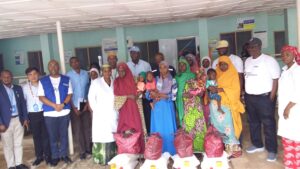
The coordinator emphasised that stakeholders and agencies of government should mobilise resources to support humanity and help the children in need.
” I visited a stabilisation centre for malnourished children that is run by the government and supported by the International Rescue Committee and UNICEF here in Yola.
”The scenes I saw were heart wrenching because I saw babies fighting for their lives, it is unconscionable that we should see this level of suffering today.
”We must stand together to act for humanity to make sure that we can put an end to their plight,” he said.
He expressed worries about the ability of families to bear the cost of treatment hence the need for collective action to support humanity.
”Malnutrition also comes at an enormous cost to children’s physical and intellectual development, meaning that they may never reach their full potential.
“I met mothers who were both hopeful and worried. They are hopeful that
their children will get better soon but they are also worried that their children may get sick once again.
”Because they can’t access enough nutritious food to sustain their health and I share their worries.
”Our ability to support these efforts is rapidly diminishing because the resources that we saw mobilised for the COVID 19 response, and the global solidarity are no longer there.
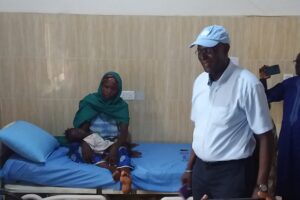
He however expressed optimism with the Federal and state government’s support to address the situation.
”What gives me hope is that the state government working with development partners can bring hope to people in need.
”So, For me, the humanitarian space is one of the main spaces where humanity has its true expression.
”It is a space where you see humanitarian actors risking their lives to save other people’s lives, to reduce vulnerability, to protect and to help
people get back on their feet,” he said
A medical practitioner in the centre Sani Mohammed who was part of the team that took the UN Coordinator around the facility said, the centre received an average of ninety six thousand patients annually within and outside the State(NAN