

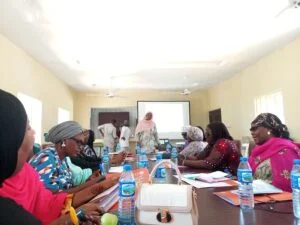
The Kaduna State Ministry of Women Affairs and Social Development, in collaboration with the UNFPA, has commenced a two-day stakeholders’ workshop aimed at accelerating the elimination of Female Genital Mutilation (FGM) across the state.
Speaking at the opening of the workshop on Tuesday in Kaduna, the UNFPA Assistant Representative and Reproductive Health Specialist, Dr Audu Alayande, described the gathering as a critical platform for strengthening collective efforts to protect the rights, health and dignity of women and girls.
Alayande said UNFPA, the United Nations sexual and reproductive health agency, is committed to ensuring every pregnancy is wanted, every childbirth is safe and every young person’s potential is fulfilled.
He noted that the agency’s vision is to end preventable maternal deaths, unmet needs for family planning and gender-based violence, including harmful practices, by 2030.
According to him, the latest Nigeria Demographic and Health Survey puts FGM prevalence in Kaduna State at 15 per cent, slightly above the national average of 14 per cent.
He said the figure represents an urgent call for coordinated action to safeguard women and girls from harmful traditional practices.
Alayande disclosed that through the UNFPA-UNICEF Joint Programme, the agency is investing in strengthening systems, mobilizing communities, engaging young people and integrating FGM prevention into health and education structures.
He commended the Kaduna State Ministry of Women Affairs and Social Development for demonstrating leadership and commitment toward ending the practice.
The Commissioner for Women Affairs and Social Development, Dr Rabi Salisu, said FGM remains a harmful practice that negatively affects the physical, emotional, psychological and social well-being of girls and women.
Salisu, represented by her SSA, Maryam Muazu, described the practice as a violation of human rights that exposes victims to severe health complications, trauma, infections, maternal complications and, in some cases, death.
Salisu said sustainable development cannot be achieved while harmful practices continue to threaten the lives and future of girls.
According to her, the workshop forms part of broader efforts to strengthen advocacy, awareness creation, community mobilization and institutional collaboration aimed at ending FGM in communities across the state.
She urged participants to contribute actively to discussions, share experiences and develop actionable recommendations that would strengthen collective responses to the practice.
The commissioner stressed that government institutions, traditional rulers, religious leaders, parents, teachers, healthcare providers, community organizations and young people all have vital roles to play in ending FGM.
She also underscored the importance of community sensitization and grassroots engagement, noting that sustainable change occurs when communities understand the dangers of FGM and become advocates for protecting future generations.
She expressed confidence that collective action would help build a society where every girl is protected, empowered and given the opportunity to thrive without discrimination or harm.
Salisu called on participants to serve as ambassadors against FGM in their respective communities and institutions.
She reaffirmed the commitment of the Kaduna State Government under the leadership of Uba Sani to advancing policies and programmes that promote child protection, gender equality, women empowerment and social inclusion.(NAN)


