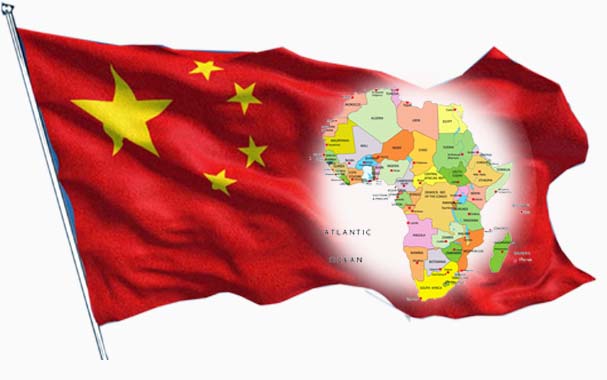
There is an understanding among those who follow Chinese-Africa relations that state-owned and private Chinese companies have become major investors in Africa over the past 10 years. Even Chinese individuals are investing small amounts in enterprises ranging from restaurants, acupuncture clinics to retail outlets. It is possible that in the past several years, China was the single largest bilateral source of annual foreign direct investment (FDI) in Africa’s 54 countries.
There is, however, considerable confusion as to what constitutes Chinese investment in Africa, and possibly seem like. Many analyses, especially journalistic accounts, conflate investment with multi-billion dollar loans from China to African governments that often use the loans to build infrastructure by Chinese construction companies.
These loans tend to go to resource rich countries such as Angola, Democratic Republic of the Congo and Ghana and are usually repaid by shipping natural resources to China. These loans are not FDI (an investment in the form of a controlling ownership in a business in one country by an entity based in another country); they are commercial deals, even though they come with a concessionary loan component. It is important to keep them separate from investment.
No one can categorically state how much has Chinese companies and individuals invested in Africa. For that matter, it is not even clear how China defines FDI; some groups even called it ODI – Outward Direct Investment (a business strategy where a domestic firm expands its operations to a foreign country either via a green field investment, merger/acquisition and/or expansion of an existing foreign facility).
Specifically, the cross-sector regressions show that Chinese firms invest in the more skill-intensive sectors in skill-abundant countries, but the less capital-intensive sectors in capital-abundant countries. These patterns are mostly observed in politically unstable countries, suggesting stronger incentives to maximize profits in tougher environments. The predominance of Chinese ODI in services appears to be related to host countries’ natural resource abundance, which is also consistent with the profit-driven nature of Chinese ODI.
More than 2,000 Chinese companies have invested in Africa, said a source. Most of the investment has gone into energy, mining, construction and manufacturing.
China’s state-owned oil companies are active throughout the continent. Privately-owned Huawei and publicly-traded ZTE have become the principal telecommunications providers in a number of African countries. While most of their activity is sales, their operations are so large in some countries that they have established huge local offices.
Increasingly, Chinese companies are moving into finance, aviation, agriculture and even tourism.
China began to increase significantly its investment in Africa at a time when Western companies, including those in the United States, were drawing back from Africa. China took advantage of opportunities and, to some extent, filled a void left by the West.
However, because Western companies began investing in Africa much earlier, their cumulative investments far exceed China’s FDI in Africa.
Some scholars have also suggest that the Chinese investment will mop-up Africa’s business opportunities to the detriment of Western and indigenous firms, adding that the debt of Africa countries would be on the rise, in turn give rises to infrastructure dilapidation, poverty and social unrest most times. Given these developments, is it possible for Africa to benefit from increasing Chinese investments in Africa?
While it is easy to conclude that China is taking over and ‘colonising’ Africa when one sees ‘Made in China’ goods in every African marketplace and Chinese construction crews on seemingly every construction site, it is easy to forget that Chinese goods and labour are able to enter the African marketplace amicably, rather than the historical model by which Beijing would be sailing a warship up to the coast and forcing African governments to accept trade.
In fact, Chinese goods and companies are possible in Africa because WTO efforts over the past two decades have decreased trade tariffs and opened up the African marketplace. Ironically, therefore, it is not a ‘colonialist’ China, but the WTO that set the playing field for Africa as an attractive opportunity for China.
In Africa’s price-sensitive marketplace, telecommunications infrastructure, for example, has become very reliant upon Chinese technology, which is competitively priced, durable and enjoys strong back-up service compared to its Western competitors.
Similarly, Chinese construction companies are able to overcome difficulties and deliver roads and bridges on budgets that cannot be matched by Western or even local companies. Chinese companies, however, do not always get it “right”.
What is often ignored when the media portrays the Chinese as a new colonial power in Africa is how much China needs Africa. As a growing economy, China needs African energy, resources and access to African markets.
As a rising power, China needs the political support of African leaders as bulwark against the West. From Africa’s perspective, Chinese investment – especially in basic infrastructure – is more than welcomed. It is estimated that Africa suffers from a $900 billion infrastructure deficit: without potable water, all-weather roads, adequate power and reliable communication, African economies cannot thrive.
China’s focus on basic infrastructure investment will lay the groundwork for children to be able to go to school and businesses to trade. But China’s arrival will bring challenges. ‘Made in China’ products over the past two decades have had a devastating effect on local manufacturing. Despite the shortcomings of Chinese firms that engage in poor labor and environmental practices and the competition they bring to indigenous companies, growing Chinese investments, so long as Africa grasps the opportunity, will provide a net positive gain for African economies and people in the coming decades.
A final point about the allocation of Chinese investment overall is that it is indifferent to the recipient countries’ property rights/rule of law, whereas Western investment tends to stay away from the poor governance environments. Since Chinese investment is equally distributed between good and poor governance environments, whereas Western investment is concentrated in the former, the share of Chinese investment in the poor governance environments tends to be high.
We are still on the look-out for the yields of china’s product and services in Africa. Would it bear an everlasting gain or irreparable loss? Only time could tell.