By Balogun Fisayo
Every morning, before the sun rises, thousands of commercial bus drivers set out to transport millions of Lagos residents to work, school and business centres.
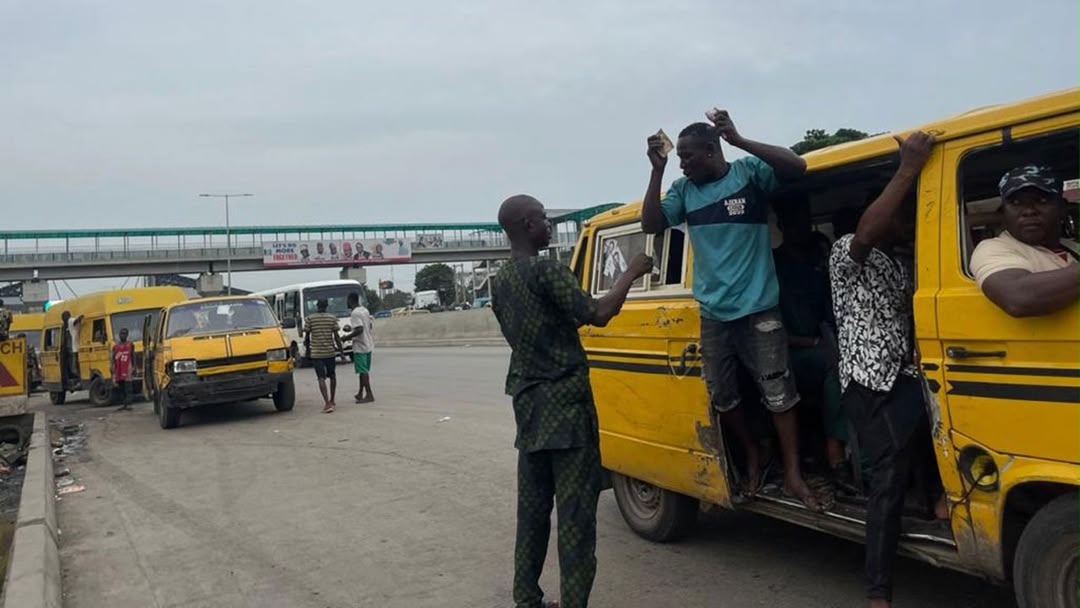
While heavy traffic and poor road conditions remain major challenges, another reality has become a regular part of their daily routine—frequent stops to make roadside payments to individuals popularly known as agberos.
Across many major roads and bus stops in Lagos, commercial buses are flagged down at different points during a single trip.
Drivers are often required to make payments before continuing their journeys, creating repeated interruptions that many say have become an accepted part of public transportation in the state.
The repeated collections occur on several routes connecting different parts of Lagos.
As buses move from one area to another, drivers may stop multiple times to settle various levies.
These delays, though sometimes lasting only a few moments, accumulate over the course of the day and contribute to longer travel times for both drivers and passengers.
For commercial drivers, the collections represent another expense in addition to the cost of fuel, vehicle maintenance and other operating costs.
The financial burden can affect daily earnings and add pressure to an already demanding profession.
The impact extends beyond drivers.
Passengers also experience the consequences through longer journeys, unexpected delays and, in some cases, increased transport fares.
Many commuters spend hours travelling across Lagos each day, and repeated roadside stops further lengthen an already stressful commute.
Despite these challenges, commercial drivers continue to play a vital role in keeping Lagos moving.
From the early hours of the morning until late at night, they transport workers, students, traders and other residents across the city’s busy roads, ensuring that economic and social activities continue without interruption.
The activities of agberos around bus parks and transport routes have remained a subject of public discussion for many years.
While some individuals are associated with transport-related activities around motor parks, concerns have continued to be raised over repeated roadside levy collections and their effect on commercial transportation.
As Lagos continues to grow in population and economic importance, many residents believe there is a need for greater transparency and improved regulation of transport-related collections.
A more organized system, they argue, could reduce delays, improve the working conditions of commercial drivers and make daily commuting more efficient for millions of Lagos residents.
For now, roadside levy collections remain a familiar sight on many Lagos roads.
From the first bus leaving before dawn to the last vehicle returning after dark, commercial drivers continue to navigate traffic, rising operating costs and repeated roadside stops as they work to earn a living while keeping Nigeria’s commercial capital in motion.