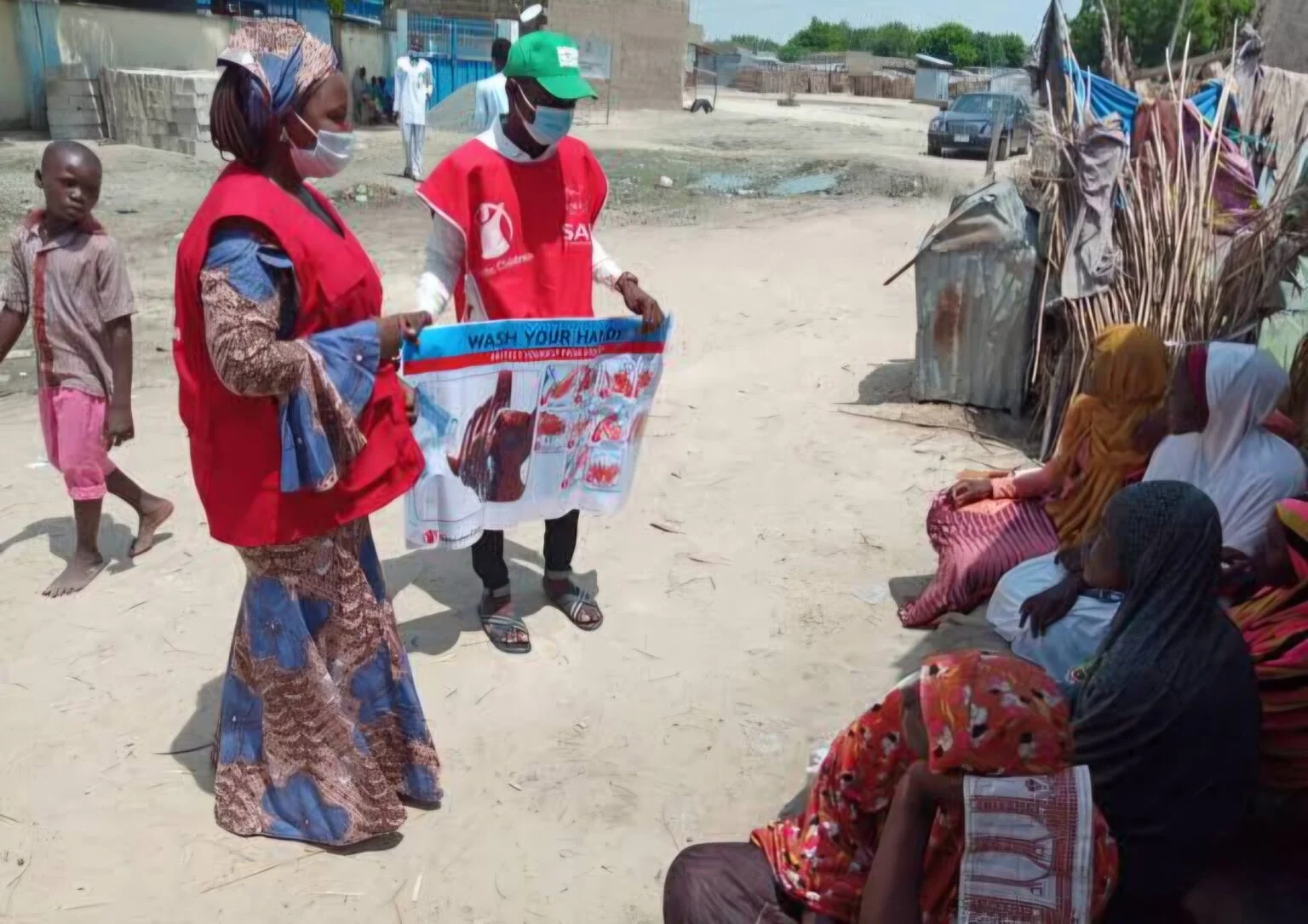
Humanitarian organizations have renewed calls for greater investment in local leadership, stronger partnerships and innovative approaches to tackling Nigeria’s humanitarian challenges.
The call was made on Tuesday at the Humanitarian Xchange (HX) Abuja conference organized by the Humanitarian Leadership Academy (HLA) in collaboration with Save the Children Nigeria.
The two-day event is themed, “Strengthening Local Voices, Partnerships, and Innovation in Humanitarian Response,” and focuses on promoting locally led solutions to humanitarian emergencies across affected communities.
Director of HLA, Pawel Mania, said humanitarian responses became more effective when local organizations were empowered to lead emergency interventions.
According to him, local actors possessed the knowledge, relationships and understanding needed to respond quickly during emergencies but were often excluded from key decision-making processes.
Mania said local organizations were usually closest to affected communities and should be placed at the centre of humanitarian discussions to encourage collaboration, learning and more effective response mechanisms.
He explained that HLA focused on building the capacity of frontline responders rather than directly implementing humanitarian interventions, helping communities develop skills and knowledge to address crises independently.
According to him, HLA had spent the last decade supporting local organizations worldwide through learning programmes, including its online learning platform, Kaya Connect, which has attracted nearly one million learners globally.
Mania said Nigeria ranked among the top five countries on the platform, reflecting strong interest among humanitarian actors in learning and improving humanitarian practice.
He added that technology continued reshaping humanitarian work, noting that artificial intelligence offered opportunities for innovation and should be influenced by communities directly affected by humanitarian crises.
Also speaking, Director of Programme Operations, Save the Children International Nigeria, Mr Joshua Anar, described children as the greatest victims of the country’s humanitarian crisis.
Anar said millions of children continued to suffer from hunger, malnutrition, conflict and disrupted education caused by insecurity, displacement and other humanitarian challenges across affected communities.
He said the conference provided humanitarian organizations with an opportunity to reflect on shared experiences, strengthen collaboration and identify better ways of addressing humanitarian challenges.
According to him, participants travelled from Borno, Yobe, Adamawa, Sokoto and other humanitarian response locations to engage colleagues and exchange ideas in Abuja.
Anar emphasized that strengthening local organizations remained central to achieving effective humanitarian response because they were embedded within communities and often served as first responders.
He urged government institutions, donors and international organizations to continue investing in local organizations through training, partnerships and institutional support to strengthen emergency response capacity.
Speaking on declining donor funding, Executive Director of Forward in Action for Education, Poverty and Malnutrition (FESPAM), Mrs Dabis Mwalike, said many organizations were scaling back operations in spite of growing needs.
Mwalike said the conference examined how organizations could adapt to shrinking resources while maintaining support for affected populations and sustaining essential humanitarian services.
She identified stronger collaboration among indigenous organizations as a key strategy for addressing funding challenges and improving humanitarian responses through shared expertise and resources.
The News Agency of Nigeria (NAN) reports that the conference, supported by Google.org, brought together humanitarian actors, government officials, youth leaders and community organizations to discuss practical solutions.(NAN).