By Oduroye Christian
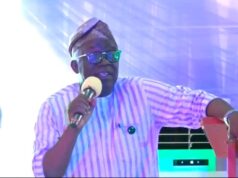
Inadequate financing remains the greatest obstacle to Nigeria’s efforts to build a low-carbon economy, former Minister of Information and Culture, Chief Lai Mohammed, has said.
According to him, although governments and industries have shown increasing commitment to climate action, the lack of sustainable funding continues to slow the expansion of clean energy infrastructure across Africa.
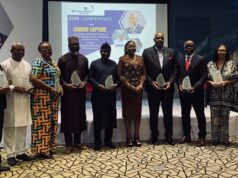
Mohammed spoke on Thursday at the fifth Oriental News Nigeria Conference held at the Radisson Blu Hotel, Ikeja, Lagos.
The conference, themed “Carbon Capture: Accelerating the Decarbonization Initiatives in Nigeria’s Extractives Industry through Broad Regulatory Reforms,” brought together policymakers, regulators, investors, academics and energy experts to discuss strategies for reducing carbon emissions in Nigeria’s extractive industry.
He said achieving meaningful progress would require governments, regulators, financial institutions and private investors to work together in developing innovative financing models, strengthening carbon markets and creating policies that encourage long-term investment.
“Financing remains one of the greatest barriers to scaling clean energy infrastructure across Africa,” Mohammed said.
He added that sustainability should no longer be viewed as a regulatory obligation alone, noting that organizations that embrace sustainable practices are better positioned for long-term growth and competitiveness.
The convener of the conference and Publisher of Oriental News Nigeria, Mrs. Yemisi Izuora, said the event was organized to encourage practical conversations on carbon reduction, regulatory reforms, investment and operational sustainability within Nigeria’s extractive industry.
She noted that while the sector continues to contribute significantly to national development, addressing its environmental impact requires stronger collaboration among government agencies, industry operators and development partners.
Also speaking, the Chairman of the occasion, Professor Silk Ogbu of Lagos Business School, urged stakeholders to focus on practical implementation rather than making ambitious climate commitments without measurable results. He said sustainable development depends on actions that produce lasting environmental impact.
The Rural Electrification Agency, in a keynote address delivered by Gboyega Ayoade on behalf of its Managing Director and Chief Executive Officer, Dr. Abba Abubakar Aliyu, said Nigeria’s transition to cleaner energy should improve electricity access, support industrial development and strengthen economic growth alongside efforts to reduce emissions.
Representing Sahara Group’s Group Managing Director, Engr. Kola Adesina, Engr. Leiste Aihevba also stressed the need for stronger investment in climate initiatives. He said the country’s decarbonization targets would remain difficult to achieve without adequate funding and practical implementation.
He said, “Green ambition without green money is merely a lovely speech.”
Participants at the conference agreed that stronger financing, clearer regulations and sustained collaboration among government, industry and investors would be critical to advancing Nigeria’s decarbonization agenda.