

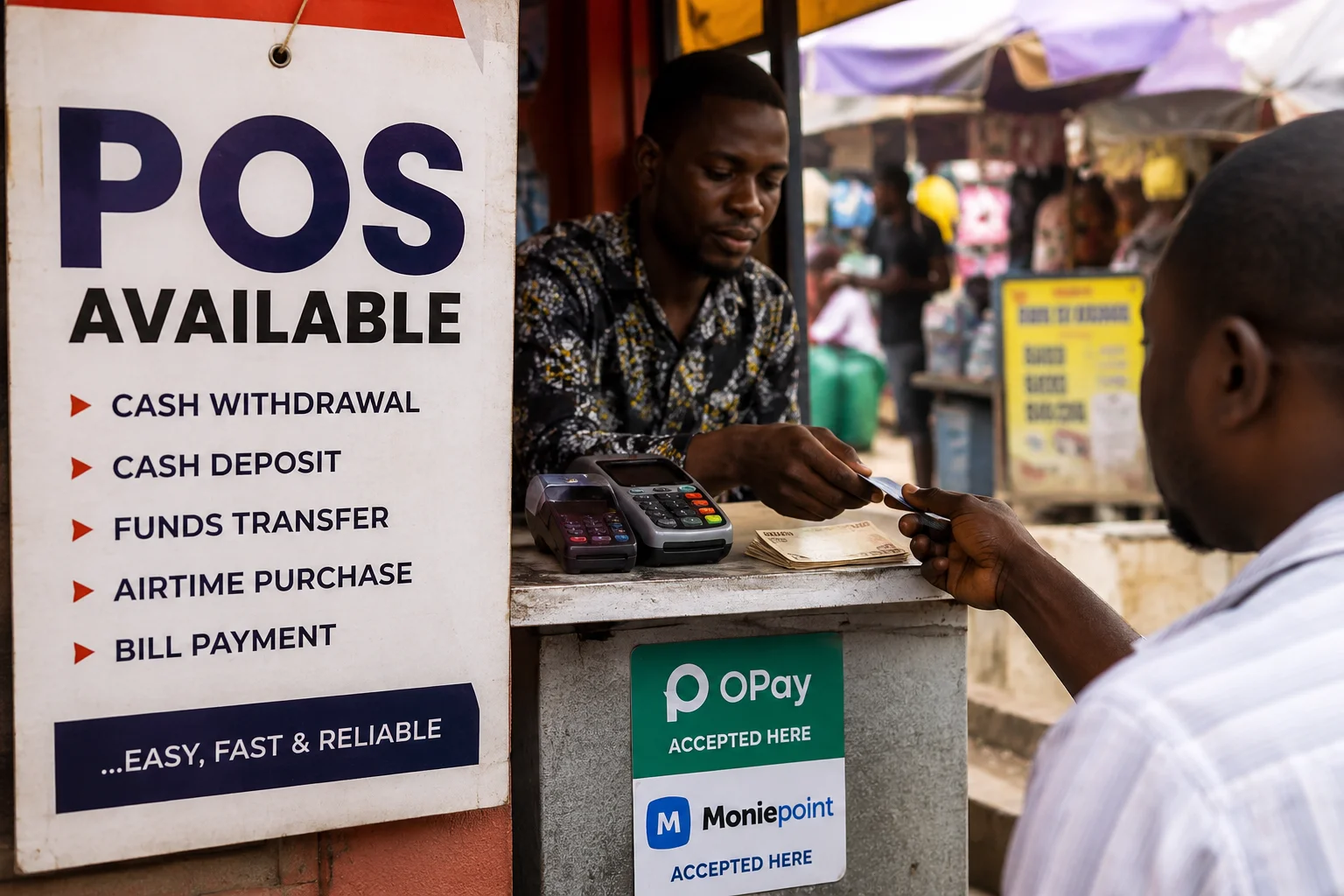
Some Point-of-Sale (PoS) vendors in Dutse, Jigawa, have expressed concern over growing decline in their patronage as consumers embrace digital payment platforms for cashless transactions.
Consumer acceptability of instant bank transfers, mobile wallets, and direct fintech applications has directly impacted the PoS businesses, as the vendors record low transactions resulting in decreased commissions, and tighter profit margins.
A cross-section of the vendors said this in separate interviews with the News Agency of Nigeria (NAN), on Monday in Dutse.
Mr Aliyu Bashir, a PoS vendor, said the business was becoming less profitable due to declining patronage.
He attributed the trend to the widespread ownership of PoS terminals by traders and the increased consumer reliance on fintech such as Opay, Moniepoint and others for direct transactions.
Bashir said the business could no longer sustain him as it once did.
“I cannot rely on being a PoS agent anymore because the business has become a commonplace.
“In Dutse, almost every shop either operates its own PoS terminal or displays an account number on the wall for customers to make direct transfers,” he said.
Bashir said the growing popularity of digital wallets significantly reduced the need for cash withdrawals.
“Today, almost everyone has either an OPay or Moniepoint account, while many maintain multiple digital wallet accounts. Customers no longer need to withdraw cash before making purchases because they can conveniently transfer money directly to the sellers,” he said.
Another operator, Mr Ya’u Lawan, said increasing competition and changing payment habits had forced many vendors to diversify into other businesses.
Lawan, who also trades in charcoal and firewood, said PoS business alone could no longer guarantee steady income.
“I combined PoS services with other businesses because it is no longer sustainable.
“Since the introduction of the cashless policy, many people have become accustomed to paying for goods and services through direct bank transfers,” he said.
Also, Abdulmudallib Hudu, described the business as lucrative during the early years of the cashless policy.
“At that time, customers often booked in advance to withdraw cash from my outlet because demand was very high,” he said.
Hudu lamented that things changed as most consumers buy goods and make payments through transfers.
Corroboratively; Salimu Sale said he had reduced PoS operations to a supplementary service meant mainly to attract customers to his other businesses.
“About 80 per cent of my earnings now come from other commercial activities, and not from PoS services,” he said.
Sale said that his daily income dropped to less than N2,000 as against N10,000 previously.
He, however, said that the business continues to attract young people in the area due to limited employment opportunities in spite of the declining profitability.
The vendor also identified fraud, dishonesty and increasing competition as major challenges confronting the business.
Mrs Bilkisu Yusuf, a customer, said the frequency of her cash withdrawal has reduced drastically since the shift to digital platforms.
“Yes, I still withdraw cash, but not so often because most businesses now accept direct transfers.
“I only withdraw small amounts for minor expenses where electronic payments may not be possible,” she said. (NAN)


