Security experts, media practitioners and other stakeholders have endorsed a rights-based communication framework aimed at promoting professionalism, accountability and respect for human rights in security and media reporting.
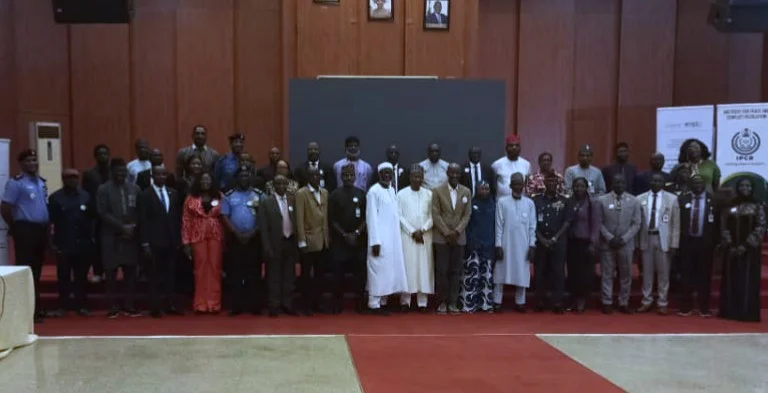
The endorsement is contained in a communiqué issued at the end of a Validation and Review Meeting of the Draft Anti-Ethnic Stereotyping and Profiling Toolkits for Security and Media Reporting held on Wednesday in Abuja.
The meeting is organized by Beacon Security and Intelligence Limited (BSIL) and the WhiteInk Institute for Strategy Education and Research (WISER) with support from key government institutions and development partners.
The stakeholders said the framework was designed to encourage responsible, conflict-sensitive and evidence-based communication practices while strengthening public trust, social cohesion and national stability.
They emphasized that ethical communication, operational effectiveness, public accountability and respect for human rights should be seen as complementary objectives rather than competing priorities.
According to the communiqué, participants agreed on the need to clearly distinguish between unlawful ethnic profiling and legitimate intelligence-led, evidence-based and professional practices in both security operations and media reporting.
They noted that the toolkits should not be interpreted as discouraging lawful professional responsibilities, but rather as providing guidance for carrying them out in a manner consistent with human rights principles and professional standards.
The stakeholders also advocated the consistent use of neutral, factual and non-ethicized language, particularly in relation to security incidents, criminal activities, conflicts and public communication.
They agreed that examples and case studies contained in the toolkits should be contextual, balanced and carefully framed to avoid reinforcing stereotypes or creating perceptions of institutional bias.
To strengthen the documents, participants recommended harmonizing terminology, definitions and conceptual frameworks across the security and media communication toolkits.
They also called for the adoption of British English language conventions, standardized referencing formats and the inclusion of concise executive summaries to improve accessibility and ease of use.
The communiqué highlighted the need for both toolkits to address emerging challenges in the information environment, including misinformation, disinformation, artificial intelligence, online hate speech and information manipulation.
Participants further stressed the importance of training, institutional accountability, monitoring and evaluation, and multi-stakeholder collaboration to support effective implementation of the framework.
They expressed satisfaction with the overall quality and relevance of the draft toolkits and agreed that, subject to the incorporation of the observations and recommendations made during the validation exercise, the documents were suitable for finalization and implementation.
They reaffirmed their commitment to advancing communication practices that promoted responsible journalism, effective security communication, human rights protection and national cohesion in Nigeria.(NAN)