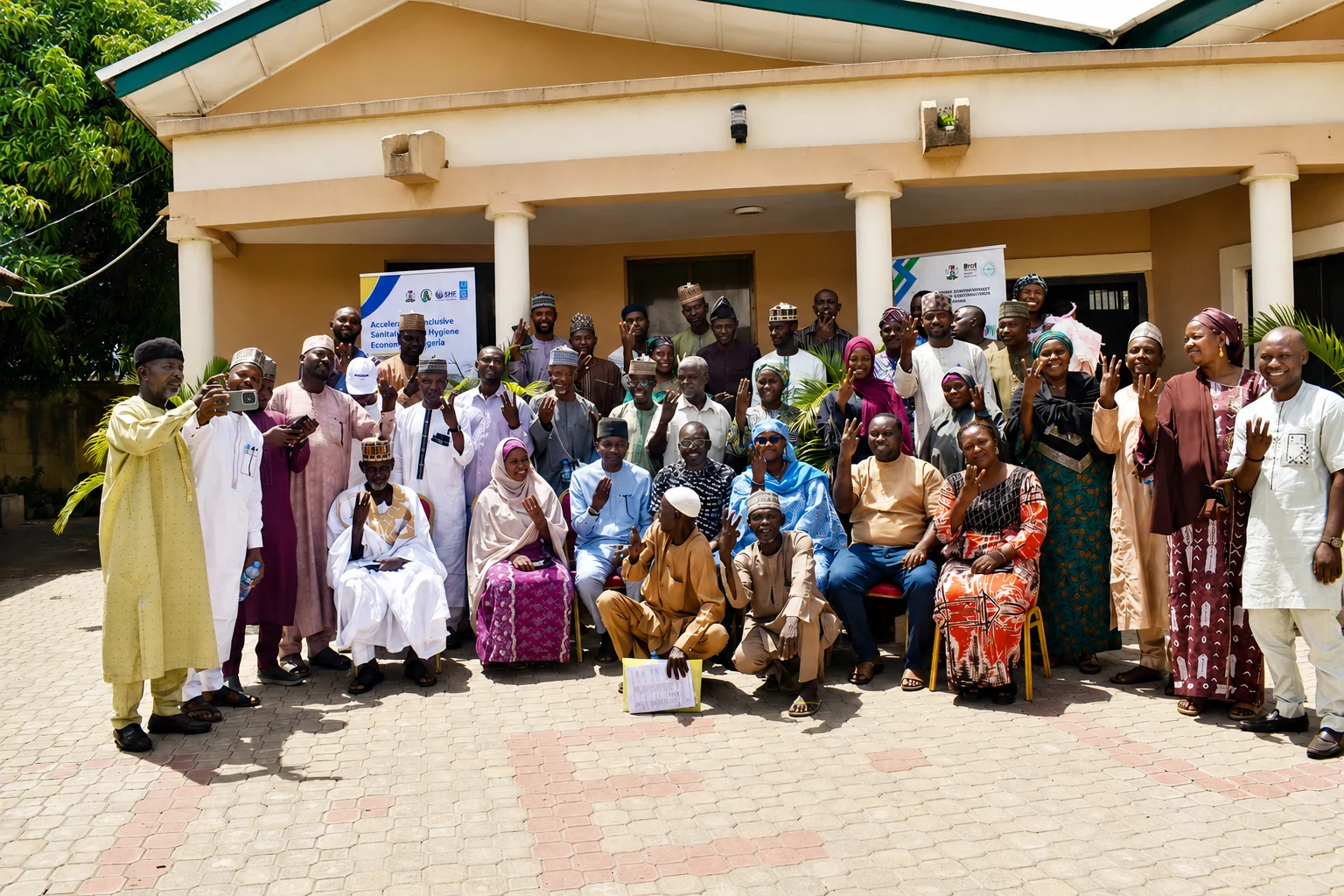
WaterAid Nigeria has urged the Bauchi government to designate faecal sludge dumping sites to promote sanitation and prevent disease outbreaks in the state.
Mr Nanpet Chktu, Head of Programmes of the organization, said this on Friday at stakeholders’ validation workshop on the assessment of risks along the sanitation service chain.
The exercise is being organized in collaboration with the Development Exchange Centre (DEC).
Chktu said the delays in developing the allocated sites for faecal disposal resulted in indiscriminate dumping on farmlands and residential areas.
He also expressed concern over the indiscriminate dumping of waste in rural communities, warning that the action was posing public health risks.
Chktu urged relevant Water, Sanitation and Hygiene (WASH) agencies, to strengthen regulatory enforcement in the state.
He said the measure was imperative to ensure effective management of the sanitation service chain, including containment, emptying, transportation, treatment, disposal and reuse.
According to Chktu, proper sanitation management presents significant economic opportunities through job creation and environmental protection.
“The government should know that there are lots of opportunities in the sanitation economy if properly managed because it can create jobs for toilet business operators, pit emptiers and farmers.
“It will help improve the economic wellbeing of the people, keep the environment clean and guarantee good health,” he said.
Mrs Helen Abah, Executive Director, DEC, said the organization has been providing sanitation financing for several years, and lamented the challenges affecting loan recovery.
She reaffirmed commitment to encourage households to construct improved toilets as part of efforts to end open defecation.
Abah advocated for practical measures to strengthen sanitation interventions by ensuring that disposal sites become fully operational.
“We are calling for interventions in the pilot local government areas of Jama’are, Misau and Tafawa Balewa, where the Sustainable Hygiene and Sanitation for All (SHF) project is being implemented in Bauchi State,” she said.
According to Abah, functional sanitation infrastructure is critical to safeguard public health, protect the environment and sustain progress toward open defecation-free communities.
Faecal Sludge Treatment Plant (FSTP) is an engineered facility designed to safely process human waste collected from on-site sanitation systems like septic tanks and pit latrines.
It prevents environmental contamination and recovers valuable resources like biogas for energy and organic fertilizers. (NAN)