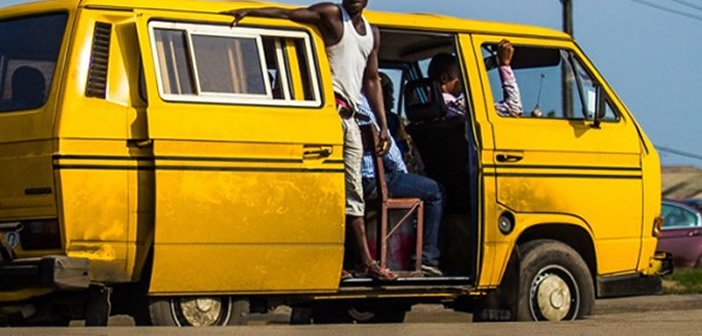
In Lagos, the iconic yellow danfo buses are known for their resilience. Rain, gridlock, fuel scarcity—nothing seems to stop them. But in recent months, something unusual has been happening beneath their hoods. Increasingly, drivers are abandoning petrol in favour of liquefied petroleum gas (LPG).
And it is not just the sleek Bus Rapid Transit (BRT) fleet or private cars making the switch. It is the rugged danfos that dominate routes from Agege to Ojuelegba, their engines now retrofitted to run on cooking gas.
The Economics of Survival
The reason is straightforward: petrol has become unaffordable. A refill of LPG costing under ₦1,000 can sustain multiple trips across the city, compared with up to ₦6,000 worth of petrol for the same distance. For many drivers, the difference is existential.
“I dey use ₦900 gas run Mowe and come back. Before, I fit buy ₦6,000 fuel, and still dey look for money before night,” said one driver in Ojota, his arms streaked with grease, his tone matter-of-fact.
Across the city, similar stories echo from traders, salon owners, and cybercafé operators. Generators once reliant on petrol are now powered by cooking gas cylinders. The familiar buzz of the “I better pass my neighbour” generator remains, but the faint smell of gas has replaced petrol fumes.
A Cheaper, Cleaner Option—On Paper
On the surface, the transition appears to be a win. Gas is cheaper, burns cleaner, and is gentler on engines. Advocates even tout it as a potential long-term solution to Nigeria’s fuel crises, with the added benefit of reducing urban pollution.
But as with many Nigerian innovations, the rapid spread is outpacing regulation and infrastructure. LPG refilling points remain sparse in parts of Lagos, leaving drivers to improvise. Mechanics in roadside workshops offer conversions for a few thousand naira, often without safety certification or quality checks.
The result: buses carrying passengers with gas cylinders wedged in boots, beneath seats, or even strapped to rooftops. The risks are obvious. “It is not a matter of if, but when,” warns a safety officer at the Lagos Fire Service, who asked not to be named.
Innovation Born of Desperation
Despite the dangers, demand for conversion services is booming. Informal technicians, armed with little more than spanners and ingenuity, have become central players in Lagos’s new energy economy. “Business is good. Every week drivers dey come,” one roadside fitter said in Mushin.
For some, this represents grassroots innovation: ordinary citizens adapting in real time to economic hardship. For others, it is a symptom of systemic failure. “People are not choosing gas because it’s modern or eco-friendly,” argues Dr. Ifeoma Eze, an energy policy analyst at the University of Lagos. “They are choosing it because there are no viable alternatives.”
The Broader Implications
The shift raises urgent questions about safety, regulation, and governance. Should Nigeria be encouraging LPG as a transport fuel? If so, where is the investment in proper conversion centres, safety oversight, and distribution networks? Without these, the transition risks becoming another short-term coping mechanism with potentially catastrophic consequences.
As ever, it is the poor who bear the brunt of these national experiments. Danfo drivers, market traders, and small business owners are the first to test the system—absorbing the risks that policy-makers avoid.
For now, Lagos’s danfos continue to rattle along on gas cylinders, their drivers caught between necessity and danger. The hustle, as always, goes on. But the question remains: is this a glimpse of Nigeria’s transport future, or merely another desperate stopgap in a country where survival often outruns safety?