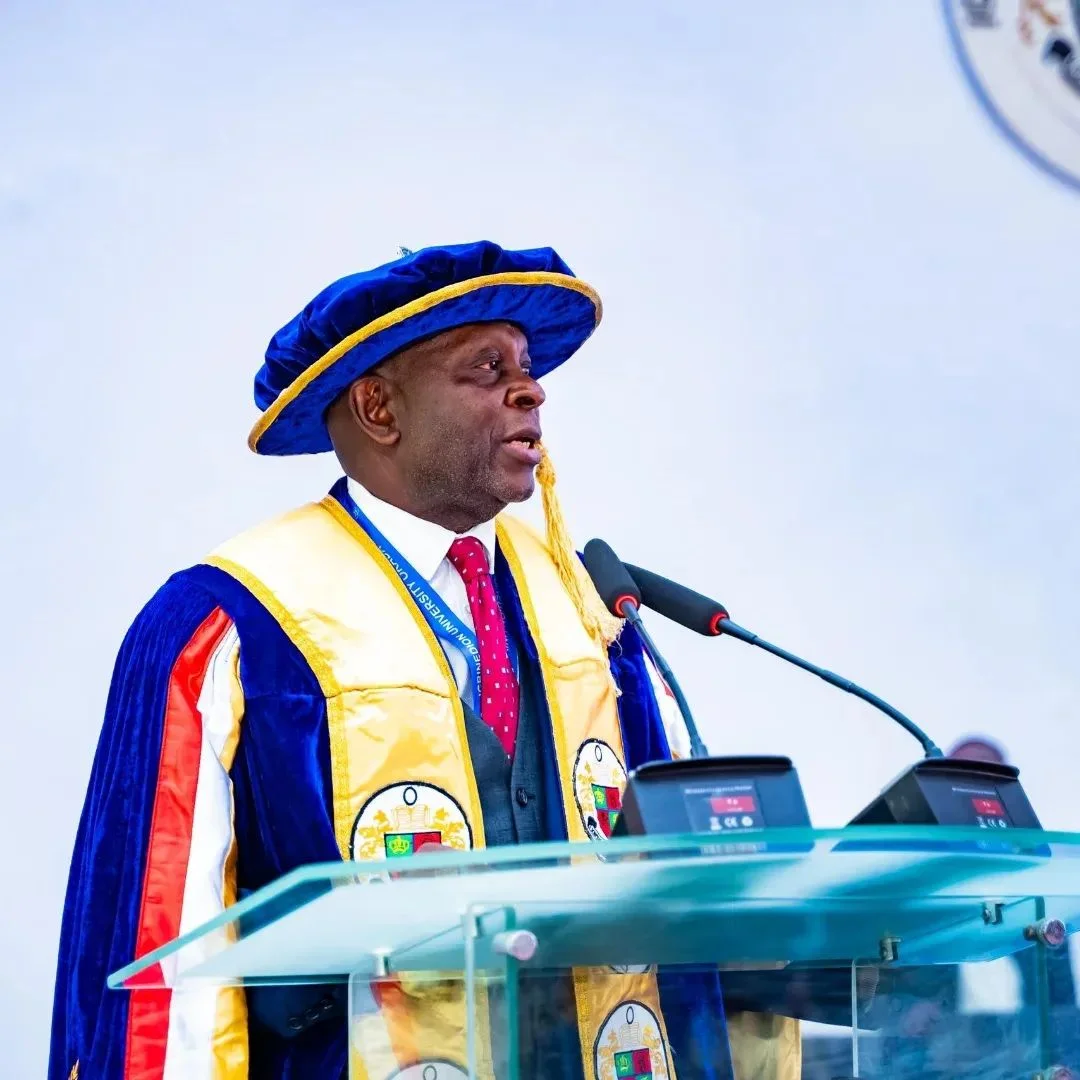
A globally ranked scientist, Prof. Charles Adetunji, has challenged Nigerian scholars to move beyond publishing papers and focus on research that attracts global grants, solves societal problems and drives sustainable development.
Adetunji, a Professor of Microbiology at Edo State University and one of the world’s top two per cent scientists, gave the charge at a one-day workshop on research, innovation and grant writing hosted by Igbinedion University, Okada.
The workshop, themed “Crafting the Grant-Winning Proposal,” was organized by the Oba Adeyeye Ogunwusi College of Natural and Applied Sciences to strengthen research capacity and equip scholars with practical grant-writing skills.
Speaking, Adetunji said many researchers underperform not due to lack of expertise, but because institutional inefficiencies and weak proposal development processes limit their success.
“Research productivity is often constrained by institutional inefficiencies rather than intellectual limitations. Most problems are systemic, not individual,” he said.
He identified administrative overload, fragmented workflows, delayed funding cycles and weak approval systems as major barriers to academic productivity.
According to him, improving research output requires structural reforms rather than simply demanding more effort from researchers.
Adetunji emphasized that research productivity should be measured not only by the number of publications, but by output, efficiency and impact.
“Productivity is output multiplied by impact and divided by time. Administration can either become a multiplier or a major constraint,” he said.
He urged young researchers to build strong academic careers by developing focused expertise, publishing in reputable journals, increasing citations, collaborating internationally and building global academic networks.
He also encouraged scholars to ask bold questions, seek mentorship, engage communities and pursue problem-driven research.
“Research begins with curiosity, not credentials,” he said.
The professor stressed that universities must ensure research findings translate into policy, innovation and societal impact, rather than remaining within academic journals.
“Imagine a society where research informs policy, innovation drives the economy, universities serve communities, and young minds solve local problems. That is the power of research beyond walls,” he said.
He linked scientific research to the achievement of the Sustainable Development Goals (SDGs), including poverty reduction, quality education, clean energy, climate action and good health.
Adetunji added that the future of research is increasingly digital, driven by artificial intelligence, big data, cloud computing and global collaboration.
“The laboratory is now virtual, global and interconnected,” he said.
In his remarks, the Vice-Chancellor of Igbinedion University, Prof. Lawrence Ezemonye, said the institution was repositioning itself to compete globally through stronger research output and grant success.
“This workshop is coming at a time when the university is focusing on research. The university is thinking research, speaking research and acting on research,” he said.
Ezemonye described research as the backbone of academic relevance and national development, noting that it provides lasting solutions to social, economic and environmental challenges.
“Research is one tool that supports the economic, social and physical development of any nation,” he said.
He added that grant writing had become indispensable for universities seeking global relevance and sustainability.
“The first step in grant writing is to craft a strong proposal,” he said.
The vice-chancellor also announced Adetunji’s appointment as a Visiting Professor in the College of Natural and Applied Sciences, noting that his global expertise would strengthen the university’s research ecosystem.
Earlier, the Dean of the college, Prof. Maureen Okwu, said the workshop was organised to enhance scholars’ capacity to secure competitive research funding.
“In today’s knowledge-driven world, the ability to secure competitive research funding is central to the survival and growth of universities,” she said.
Okwu noted that many research ideas fail not because they are weak, but due to lack of clarity, structure and strategic positioning in proposals.
“What makes the difference is the ability to present ideas clearly, persuasively and in alignment with funding priorities,” she said.
She added that grant seeking also involves building collaborations, identifying opportunities and translating research into practical solutions that benefit society.
Okwu urged scholars to fully engage the process and use research as a tool for innovation, development and national transformation. (NAN)