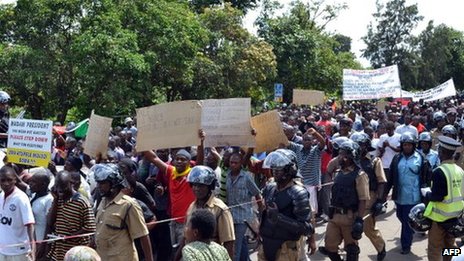
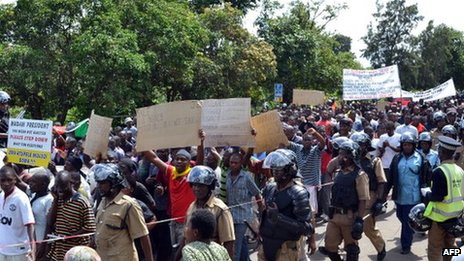
 Malawi Civil Servants Trade Union (CSTU) and Government Negotiating team (GNT) late yesterday signed an agreement ending a 9-day industrial action that started as a stay away before degenerating into full blown strike in entire public sector across the country.
The accord followed a daylong make and break talks between the two sides that were aimed at resolving the labor crisis that had brought business in public sector at a virtue standstill.
“We have signed a memorandum of understanding that we shall have a new salary structure. This means the end of the civil servants strike and all workers are supposed to return to work,” said Eliah Kamphinda Banda CSTU President during press briefing after the signing of the accord.
Banda told journalists that the lowest paid workers will get 61 percent while the highest paid will have 5 percent the package which the trade unionist leader described as close to what they were fighting for.
The workers were demanding a salary increment of 67 percent and improvement in the conditions of service. But the outstanding issues like the harmonization of salary structure in public sector will be resolved later in the ongoing dialogue in due course between the two sides.
According to the accord the new salary structure will come into effect from January this year but its implementation will start in March. But the workers will be paid arrears for the month of January and February in July after the passage of 2013/14 annual budget.
Earlier, President Joyce Banda told journalists before her departure for Malabo Equatorial Guinea for a two-day summit for heads of states from Africa and South America countries that she had ordered had budget budgetary cuts for State House and Office of President and Cabinet other departments to enable public workers salary hike.
“From the time the strike started I have been consulting my officials to resolve this matter. I am aware that public workers are among the least paid in the country and there is need to adjust their pay. Let me stress here that as I ‘m leaving I have left some offer that whatever the case, civil servants should get salary increment,” said Banda.
In light of the development, she warned that some operations where the budgetary cuts have occurred will be somehow affected.
But Mark Katsonga, President of Peoples Progressive Movement (PPM) wondered at how the formula the proposed by Banda administration would work as Minister of Finance Ken Lipenga had warned earlier that any move to hike civil servants would cripple government operations.
“It is good for the country. But it contradicts what Minister of Finance, Dr Ken Lipenga said earlier that if there will be any salary adjustment for civil servants government business will collapse. So how will they manage the situation? Does this trimming suggest that of funds to run departmental operations or trimming of staff? Government should come clearly out on this. We need clarification,” said Katsonga.
Malawi has been operations under strict austerity measures which have put in place to revive the economy which has been in dire straits the past three years with Inflation rate now at 34 percent why lending rate at 40 percent.
The country economic woes started when western donors and international finance lending institutions froze development aid and to Malawi after crossing paths with former President the late Dr Bingu wa Mutharika on governance and economic policy matters.
Following Mutharika death, Banda took over and instituted reforms which included scrapping of oppressive laws, 49 percent devaluation and floatation of the local currency as well as automatic pricing mechanism.
The adoption of these International Monetary Fund (IMF) inspired economic policies have been blamed for worsening soaring cost of living in the country which has hit hard the meagerly paid public workers most of whom earns the average pay of US$100 a month.